Wat Rong Khun: The White Temple Of Chiang Rai, Thailand
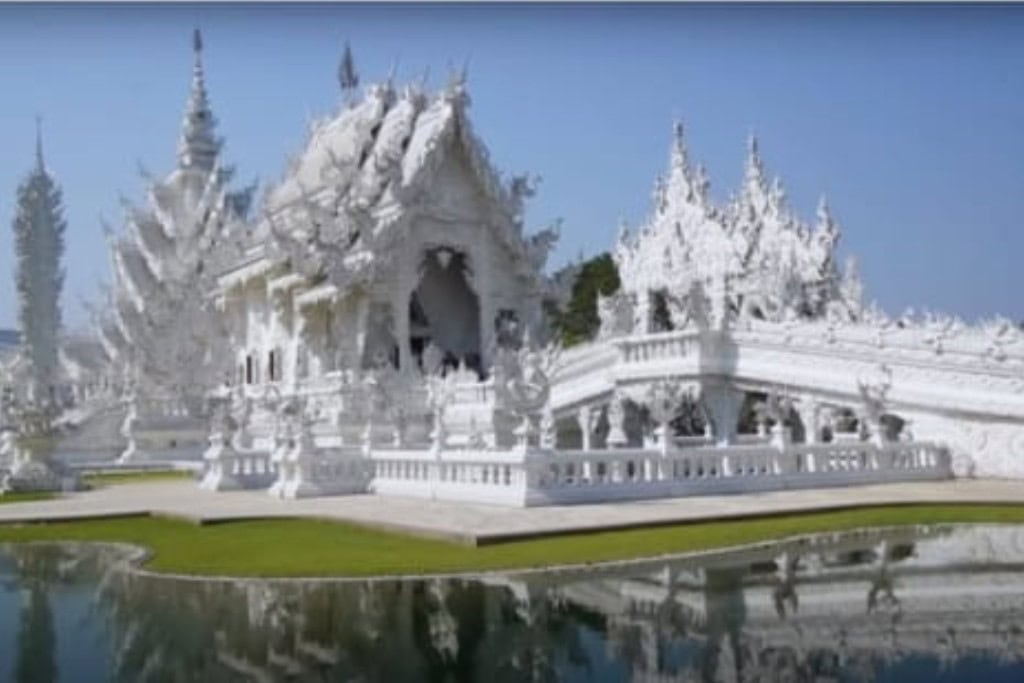

Visiting Wat Rong Khun wasn’t just another tick off our travel list, it was an unforgettable experience that blended art, popular culture, and spirituality.
The White Temple is unlike anything else you’ll see in Thailand, or even the world. It’s not an ancient relic or a traditional place of worship, it’s a modern art installation, conceived by a visionary artist.
What makes it special is the way it combines traditional Buddhist symbolism with contemporary, often unconventional imagery.
The first time I laid eyes on the sparkling white main structure, I was left speechless. It looked like something out of a dream, gleaming under the Thai sun.
temple’s intricate details and complex design, paired with its artistic elements, left a deep impression on me, making this a must-visit site for any traveler heading to northern Thailand.
Let’s dive into it.
Looking for a break from the chaos?
This intimate, non-commercial retreat in the serene Thai countryside is just what you need.
Immerse yourself in daily yoga, meditation, and mindful living while staying in a peaceful homestay.
- Daily Yoga & Meditation Classes;
- Homemade, Healthy Vegetarian Meals;
- A Genuine Connection to Thai Culture;
- Time for Self-Reflection in Nature’s Embrace.
The History Of Wat Rong Khun, When Was Wat Rong Khun Built?
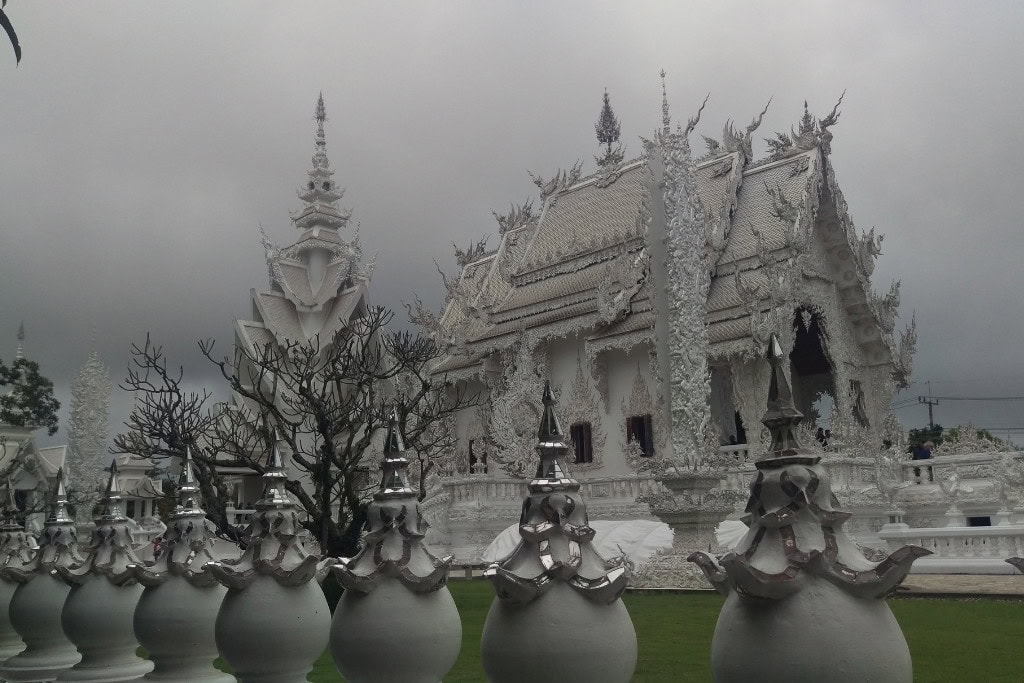
Wat Rong Khun temple was built relatively recently, especially when compared to other historic temples across Thailand. Construction was finished in 1997 under the direction of artist Chalermchai Kositpipat, a famous Thai visual artist.
Chalermchai wanted to create a temple that would showcase both his devotion to Buddhism and his love for his country, and that’s exactly what he did.
The beautiful White Temple, however, is far from complete. In fact, Chalermchai’s vision that it won’t be fully finished until around 2070.
Yes, you read that right, it’s an ongoing project that is set to continue for decades.
Why Was Wat Rong Khun Built?
The primary motivation behind the construction of Wat Rong Khun was Chalermchai’s desire to create a space for spiritual and artistic reflection.
He funded the project himself, refusing donations, because he believed that accepting financial help could limit his creative freedom.
His intention was to give back to Buddhism through his art, and the result is an expression of faith unlike anything else. Wat Rong Khun isn’t just a place of worship.
It’s a journey into the artist’s mind, as well as a visual representation of Buddhist teachings.
The Construction Of The White Temple
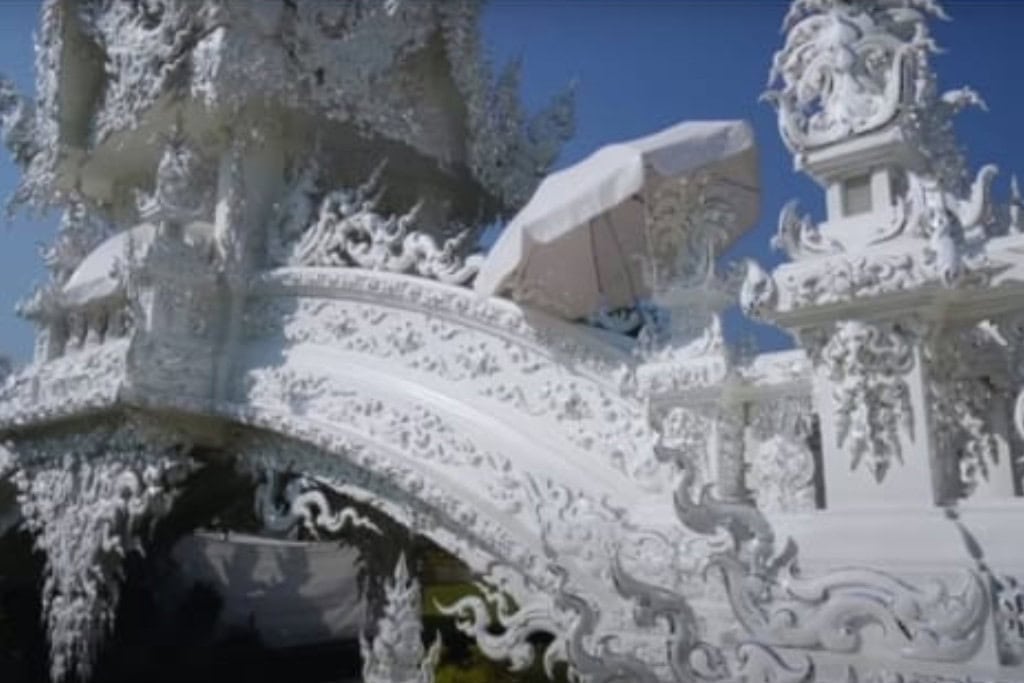
What struck me the most about Wat Rong Khun, even before stepping inside, was its dazzling white facade. The design is both meticulous and highly symbolic.
If you’re a fan of detailed craftsmanship, like I am, you’ll find yourself lost in admiration of every tiny detail, from the delicate sculptures to the massive murals that cover the interior.
Founder and Local Artist behind the Temple
Chalermchai Kositpipat is the creative genius behind Wat Rong Khun. His artistic style is a fusion of classical Thai painting and surrealism, almost fantasy-like, and he poured his heart into every aspect of the temple.
His ambition was not only to create a spiritual haven but also to leave a lasting legacy for future generations. And from my experience, it’s clear that he’s achieved that.
The Grand Opening of Wat Rong Khun
Although construction of the temple is never-ending, the temple was opened to the public in 1997.
Since then, it has become one of Chiang Rai’s most visited attractions, drawing in a large number of visitors every year. Walking through the temple’s grounds feels more like wandering through an open-air museum than a traditional temple visit.
The 2014 Earthquake, Almost Demolishing the White Temple
On May 5, 2014, Wat Rong Khun was damaged by an earthquake in Mae Lao, leading to plans for its indefinite closure.
Initially, Chalermchai intended to demolish the temple for safety. However, after engineers confirmed the buildings were structurally sound, he decided to restore the temple to its original state within two years, dedicating his real life to the project.
The temple area partially reopened to visitors a few days later on May 8, though certain areas, like the ubosot, were from then on restricted to outside photography only.
What Makes The White Temple Special?
The first thing you’ll notice, as I did, is the stark, brilliant white color scheme.
Unlike most traditional Thai temples, which are adorned with vibrant colors and gold, Wat Rong Khun is entirely white.
This symbolizes the purity of the Buddha, while the embedded mirrors represent the wisdom and teachings that guide us toward enlightenment.
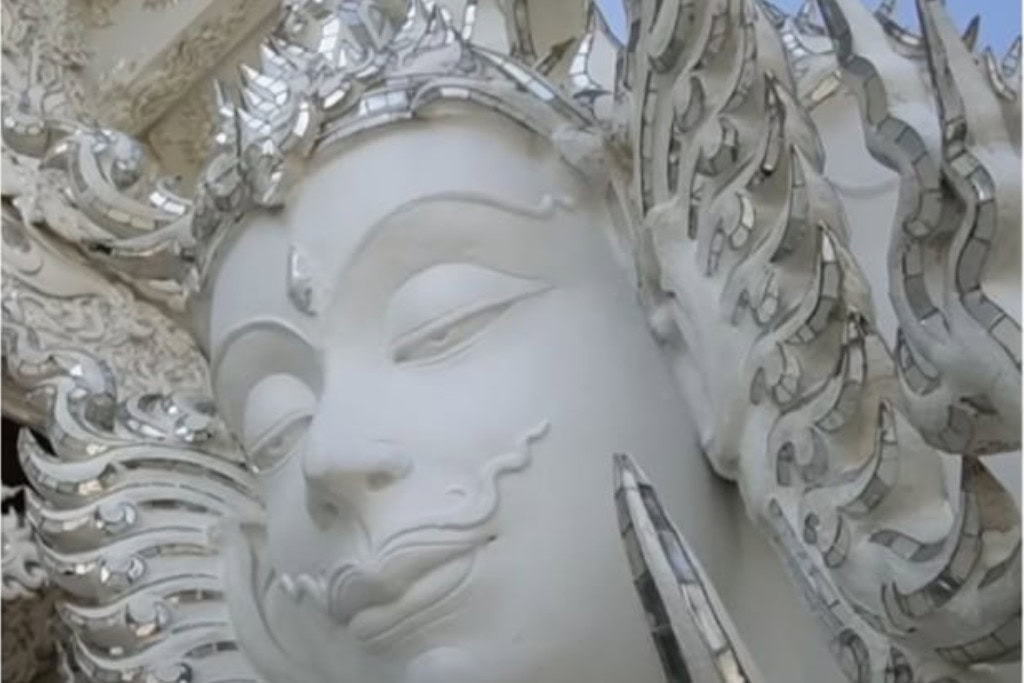
But the temple is not just beautiful, it’s deeply symbolic. Every element within Wat Rong Khun is intended to represent Buddhist teachings.
As you walk around, you’ll notice that many of the sculptures and murals blend traditional Buddhist themes with pop culture references and surrealistic elements.
Some of these depictions are a bit unsettling (there are skulls, hands reaching out of the ground, and even references to superheroes and movie characters), but they all serve to represent different aspects of life’s temptations, suffering, and the path to enlightenment.
What Does Wat Rong Khun Symbolize?
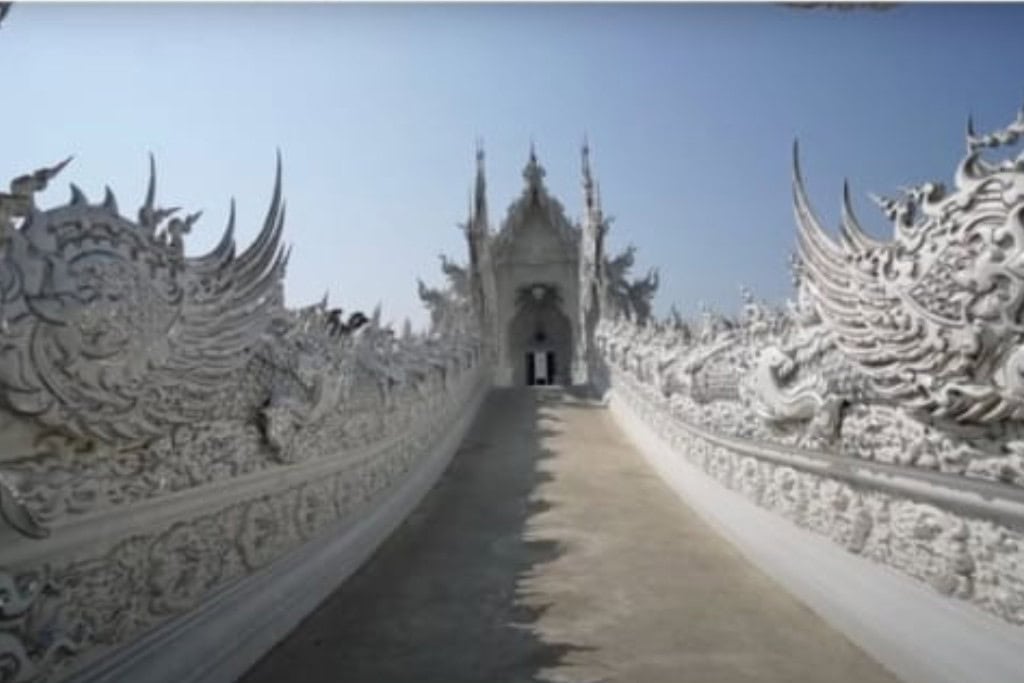
At its core, Wat Rong Khun represents the journey from ignorance to enlightenment.
The temple’s design and layout are meant to guide visitors through various stages of Buddhist teachings, symbolizing the transition from worldly desires and materialism to spiritual awakening and inner peace.
Every architectural detail, from the bridge of rebirth to the Gate of Heaven, embodies a deeper philosophical meaning.
The Major Attractions At Wat Rong Khun
The Bridge of “the Cycle of Rebirth”
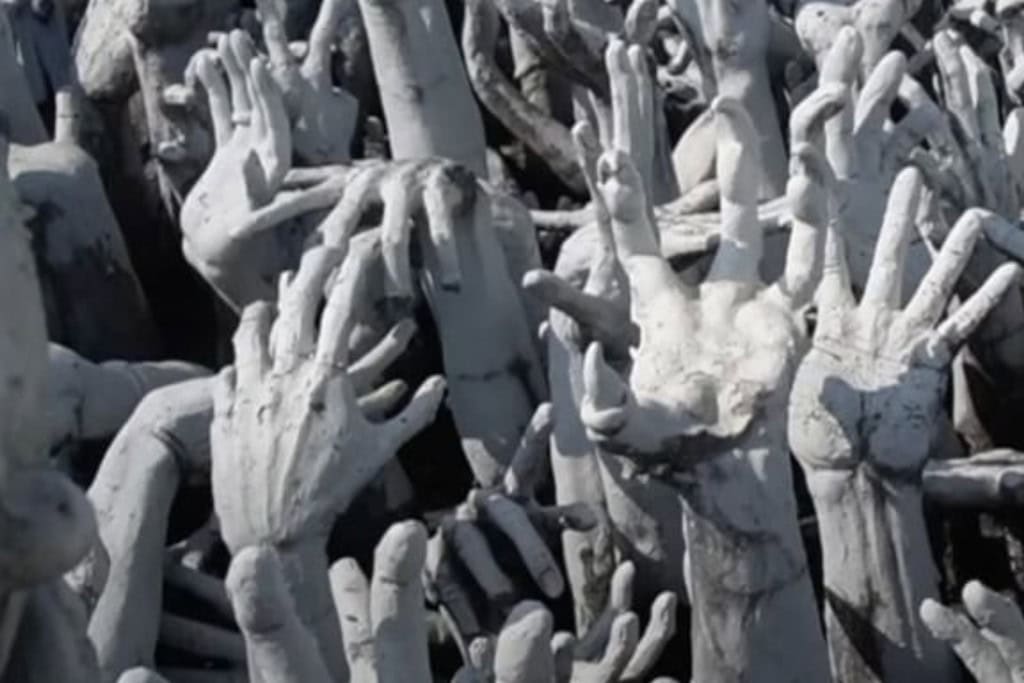
This was the first part of the temple I encountered, and it’s truly iconic. The bridge crosses over a pit filled with outstretched hands, representing human desire and the endless cycle of birth, death, and rebirth.
Walking across this bridge felt symbolic, as if I were leaving behind worldly desires and taking a step toward enlightenment.
Gate of Heaven
After crossing the bridge, you enter the Gate of Heaven, guarded by two fierce mythical creatures.
This is meant to symbolize the point at which one must confront their demons before entering the realm of the divine. It’s an intense moment, especially after walking past the sea of hands.
Ubosot
This is the temple’s main building, and its interior is nothing short of breathtaking.
The walls are adorned with murals that blend traditional Buddhist symbols with contemporary images, like Hollywood characters and modern-day issues such as war and consumerism.
This fusion of old and new left me reflecting on the challenges of modern life.
Dhamma Garden
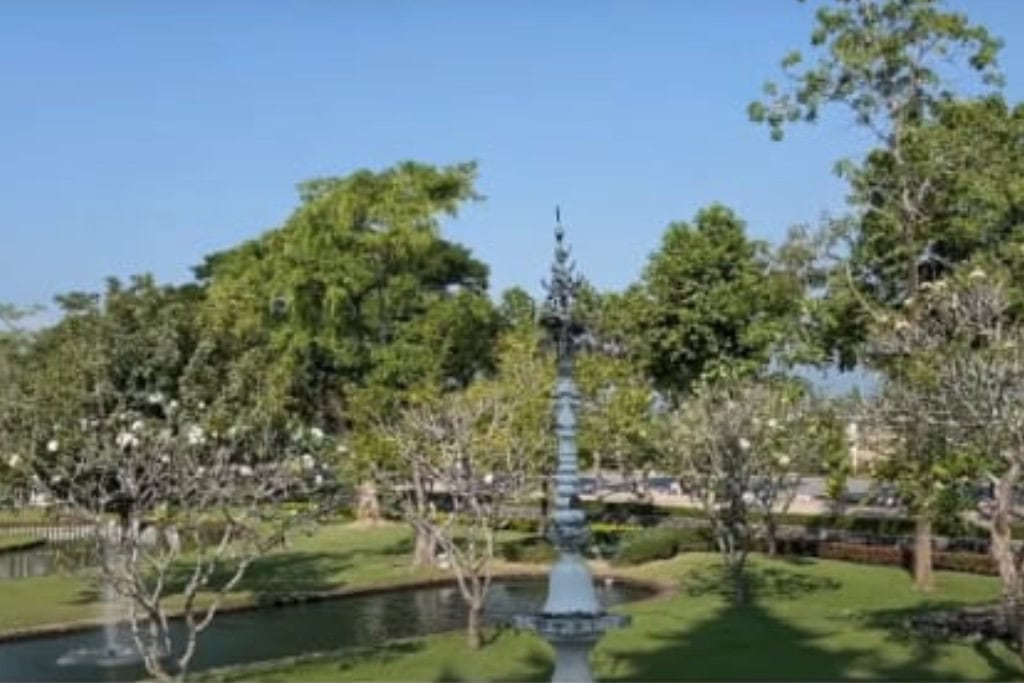
The temple grounds feature the serene Dhamma Garden, a tranquil space ideal for reflection and meditation.
Surrounded by lush greenery, trees, and flowering plants, it offers a peaceful atmosphere for unwinding.
The quiet paths encourage visitors to slow down, embrace the natural beauty, and reflect on the Buddhist teachings they’ve just experienced.
Ganesha Temple
There’s also a smaller temple dedicated to Ganesha, the Hindu god of wisdom and success.
Although Wat Rong Khun is primarily a Buddhist temple, this inclusion shows the artist’s open-minded approach to spirituality and religious harmony.
My Personal Experience At Wat Rong Khun
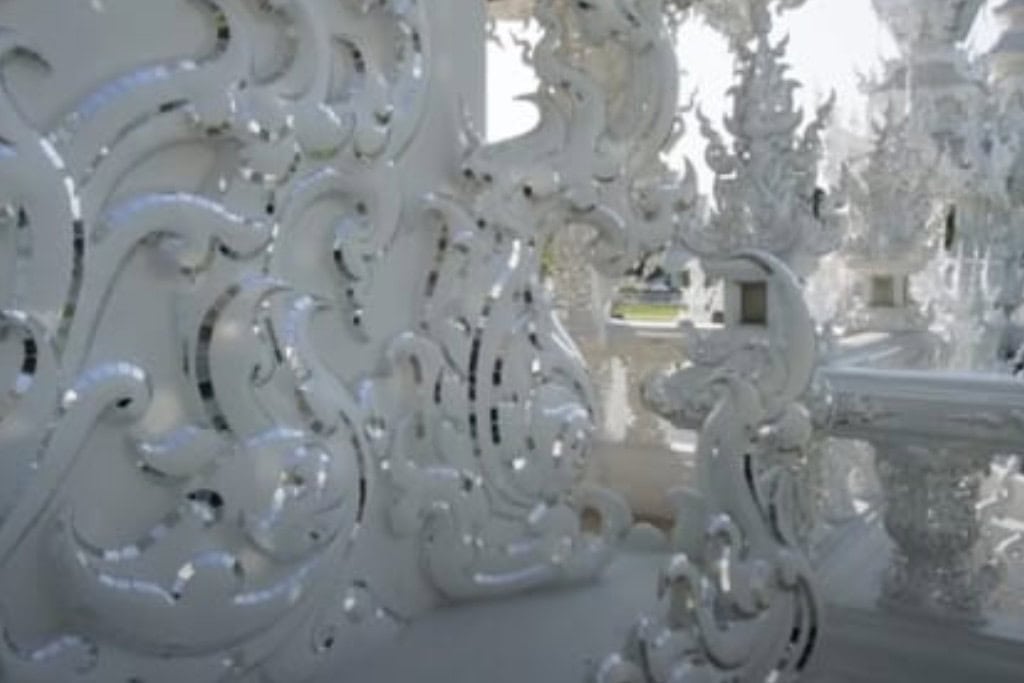
I visited Wat Rong Khun temple with my daughter on a beautiful, sunny morning. The temple was already bustling with visitors, but even with the crowds, there was an overwhelming sense of peace that settled over me the moment we stepped inside.
The reflective surfaces of the temple made it feel almost ethereal, as if it was floating in the air.
What struck me most during my visit was the contrast between the beauty of the temple and the thought-provoking, sometimes unsettling symbolism that flows through the site.
The bridge of rebirth, with its sea of outstretched hands, felt almost otherworldly. While the murals inside the ubosot forced me to confront uncomfortable truths about the world we live in today.
My Daughter was equally impressed. Even though she’s not as into temples as I am, she found the mix of traditional and modern thai art fascinating.
The pop culture references in the murals sparked conversations about how even contemporary icons can teach us something about Buddhist teachings.
FAQs About The White Temple of Chiang Rai
Wat Rong Khun Entrance Fee and Opening Times?
Wat Rong Khun welcomes visitors every day from 8:00 AM to 5:00 PM, although the Ganesha Worship Hall closes for an hour-long lunch break from 12:00 PM to 1:00 PM.
As for the entrance fee, it’s quite reasonable, priced at around 100THB ($3) per person as a foreigner.
This modest cost makes the temple accessible to a wide range of visitors, from backpackers traveling on a budget to families exploring Thailand together.
Tips For Visiting The White Temple
When visiting Wat Rong Khun, it’s important to remember that, despite its modern artistic elements, it is still a place of religious significance.
As a traveler, I always try to be respectful of local customs and traditions, and visiting Wat Rong Khun was no different. Here are some of the tips that helped me ensure my visit was respectful and smooth:
1. Dress Code at Wat Rong Khun
Wat Rong Khun is a contemporary Buddhist temple, so like other religious sites in Thailand, visitors are expected to dress modestly.
I made sure to wear long pants and a shirt with sleeves, and I’d recommend the same to anyone planning a visit.
For women, it’s advised to cover the shoulders and knees. You can use scarfes for this. There are hire shops around where you can rent or buy them for a small fee.
2. Photography
The temple grounds are incredibly photogenic, but it’s important to be mindful of the rules. While photography is allowed outside, it’s not permitted inside the ubosot.
When I first entered, I instinctively reached for my camera because the murals inside were stunning, but I quickly noticed the signs. Instead of focusing on snapping photos, I took some quiet moments to appreciate the art and reflect on its meaning.
3. Respect the Art
Wat Rong Khun is also a delicate work of art, and some areas are roped off to protect the sculptures. Please resist the urge to touch anything, especially the intricate carvings and statues.
During my visit, I saw a few signs gently reminding people of this, and it’s a good practice to follow.
4. Avoid Peak Hours
If possible, try to visit early in the morning or late in the afternoon.
We arrived around 9 AM, and although it was already getting busy, it wasn’t too crowded. By the time we left 1.5 hours later, the temple was packed with tour groups.
Visiting earlier allowed us to take in the beauty of the place in relative peace, and it made for better photo opportunities without too many people in the background.
5. Mobility Challenges
One of the great features of this temple is the availability of complimentary wheelchairs at both the front and back entrances (near the parking lot), ensuring accessibility for visitors with mobility challenges.
Where is Wat Rong Khun Located?
Wat Rong Khun is located just outside of Chiang Rai in northern Thailand. Specifically, it’s about 13 kilometers south of Chiang Rai city center, making it a quick and easy trip from town.
It’s close enough that you could even visit on a day trip from Chiang Mai, although that would require some planning.
I found that getting to the temple from the city center was simple, and I’ll share a few travel options below that might help you plan your visit.
How to Get to The White Temple?
There are several ways to reach Wat Rong Khun temple, depending on where you’re coming from and what your budget looks like.
Here are the most popular methods:
A. By Car or Taxi
I opted for a taxi, which cost about 200-300 THB from central Chiang Rai, and it was incredibly convenient.
The drive took about 20 minutes, and since taxis are plentiful in Chiang Rai, it wasn’t difficult to find one to take us back after our visit.
If you prefer more flexibility, renting a car is also an option, but make sure to factor in the extra cost of gas and parking. For those driving from Chiang Mai, expect a journey of around 3-4 hours depending on traffic.
B. By Public Bus
For budget-conscious travelers, taking the local bus is a viable option. Buses run regularly from the old bus station in Chiang Rai, and the fare is around 20 THB per person.
The bus journey takes about 30-40 minutes, but it’s a straightforward route. I didn’t use the bus this time, but based on advice from other travelers I’ve met, it’s a decent choice if you don’t mind a slower pace.
C. By Tour Agency
If you prefer everything to be organized for you, several travel agencies in Chiang Rai offer half-day or full-day tours to Wat Rong Khun, often combining it with other nearby attractions like the Black Temple, Big Buddha Temple, and the Blue Temple.
This option is more expensive, but it includes transportation and a guide, which could be useful if you want more context about the temple’s history and truly get its symbolism.
Getting to Wat Rong Khun from Bangkok?
If you’re starting your journey from Bangkok, like many travelers do, you’ll need to plan for a longer trip. There are two main ways to get from Bangkok to Wat Rong Khun:
By Air
Flying is by far the quickest and most comfortable way to get from Bangkok to Chiang Rai.
Flights operate daily from both Suvarnabhumi and Don Mueang airports, and the flight itself takes just over an hour. Once you land at Chiang Rai International Airport, it’s a short taxi ride to the city center or directly to the temple.
We flew into Chiang Rai as part of our broader trip across northern Thailand, and it was hassle-free.
By Bus or Train
If you’re looking for a more scenic (or budget-friendly) option, you can take a bus or train from Bangkok to Chiang Rai.
The bus takes roughly 11-13 hours and departs from Bangkok’s Mo Chit Bus Terminal.
Alternatively, you can take an overnight train from Bangkok to Chiang Mai and then a bus to Chiang Rai’s white temple.
It’s a much longer journey, but for those who want to see more of the countryside and sleep while the train is doing all life’s work, it’s a great way to travel.
Best Time to Visit Wat Rong Khun?
The best time to visit the White Temple is during Thailand’s cooler, dry season, which runs from November to February.
During these months, the weather is more comfortable, and the temple grounds are less sweltering.
We visited in January, and the temperature was perfect for exploring. You’ll still need sunscreen and a hat, but at least you won’t be melting in the humid heat.
If you visit in the rainy season (June to October), bring an umbrella, as showers are frequent.
Early morning is the best time of day to visit, not just for cooler temperatures but also to avoid the large crowds. The temple opens at 8:00 AM, and if you arrive soon after, you’ll have the best chance of enjoying a quieter experience.
Activities to Do Around the White Temple
Once you’ve taken in the beauty of Wat Rong Khun, there are a few other interesting spots nearby that are worth exploring.
I like to make the most of my trips, so after visiting the temple, Vanessa and I headed to these other attractions:
Baan Dam Museum (Black House Museum)
Located about 10 kilometers from Wat Rong Khun temple, this museum offers a striking contrast to the White Temple.
Whereas Wat Rong Khun represents purity and enlightenment, Baan Dam has a darker, more mysterious vibe.
The museum was created by another renowned Thai artist, Thawan Duchanee, and features a collection of traditional and contemporary art housed in black structures.
Vanessa found it unsettling yet fascinating, and it made for a great follow-up to the White Temple.
Singha Park
If you’re looking for a more laid-back activity, Singha Park is a beautiful and popular spot to relax and enjoy the scenery. The park features vast tea plantations, flower fields, and even a petting zoo (but no waterfalls).
After spending the morning at Wat Rong Khun, We took a leisurely stroll through the park and even tried some local tea at one of the cafes.
You can rent a bike and have a beautiful ride along the lush landscape and see the zoo. Here we fed the giraffes and had a lot of fun.
Golden Triangle
If you have more time and are up for a bit of a drive, the Golden Triangle, where Thailand, Laos, and Myanmar meet, is a fascinating region to explore.
It’s about a 1.5-hour drive from the centre of Chiang Rai, but the scenic beauty and cultural significance of the area make it well worth the trip.
Looking for a break from the chaos?
This intimate, non-commercial retreat in the serene Thai countryside is just what you need.
Immerse yourself in daily yoga, meditation, and mindful living while staying in a peaceful homestay.
- Daily Yoga & Meditation Classes;
- Homemade, Healthy Vegetarian Meals;
- A Genuine Connection to Thai Culture;
- Time for Self-Reflection in Nature’s Embrace.
Wrap-Up: Here is a Fun Fact About Wat Rong Khun Temple
A fun fact about Wat Rong Khun that many visitors might not know is that the temple’s unique artistic style includes references to pop culture icons like superheroes and famous movie characters.
If you look closely at the murals inside the white ubosot, you’ll spot characters like Spiderman, Darth Vader, and even Michael Jackson.
These references are part of the artist’s hidden messages about the influence of modern culture and the distractions that can lead us away from the path to enlightenment.
Visiting Wat Rong Khun was an unforgettable experience, not just for the sheer beauty of the temple but also for its deeper meaning and artistic brilliance. It’s a place that challenges you to reflect on life, spirituality, and the world around you.
Whether you’re a lover of art, architecture, or spirituality, the White Temple has something to offer everyone. I left feeling inspired, and it’s a memory that we will cherish for a long time.
If you’re planning a trip to northern Thailand, make sure Wat Rong Khun is on your itinerary, you won’t regret it.
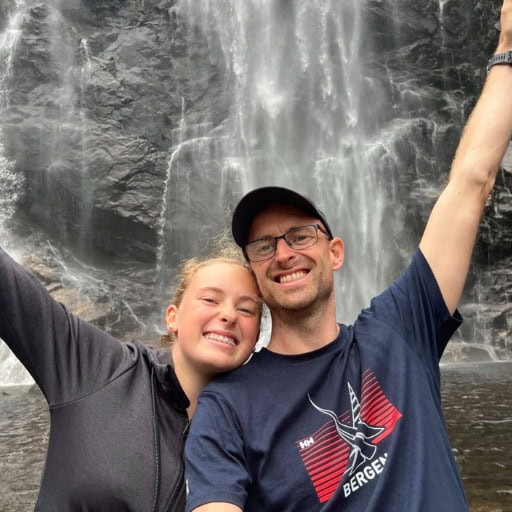
Author: Dave
Hi, I’m Dave, the author of BondingExplorers.com. For the past few years, I’ve been exploring the world with my 14-year-old daughter, Vanessa.
While I share my experiences through my blog, Vanessa continues her education through an online program that offers her the flexibility to study from anywhere, allowing us to travel the globe together.
Sabiduri Planning Guide
🧘🏽♀️Where to find spiritual retreats around the World?
The good news is that they can be found in various locations, from secluded places in nature to bustling cities. Find your ideal retreat here!
🚑 Should you buy a travel insurance?
100% YES! — With basic coverage averaging just $50 for your stay, enjoy peace of mind with a plan from Travel SafetyWing, one of the biggest names in travel insurance.
🚗 Is it safe to rent a car around the World?
Yes — Renting a car is one of the best ways to see the country you find yourself in because public transportation cannot reach everywhere! I always rent with Discover Cars, which checks both international companies and local companies, so you get the best rates.
📴 Will my phone work abroad?
Maybe — It depends on your company, so check with your provider. If you don’t have a free service, buy a SIM Card once landed in the country.
🛌🏼 What’s the best way to book my accommodations?
For hotels, Booking is the best site, but for hostels, use Hostel World. If you’re considering Flats, don’t forget to also check Couchsurfing, which is free and you stay with locals.
🛩️ What’s the best site to buy flights?
For finding cheap flights, I recommend Kayak.
🛂 Do I need a visa for these destinations?
Likely Not — U.S., Canadian, and most European Passport holders don’t need a visa for most of destination around the World. BUT check here for more travel requirements. The majority of travelers will receive a 90-Day stamp Tourist Visa upon arrival.