Visiting Borobudur: A 2026 Spiritual Guide
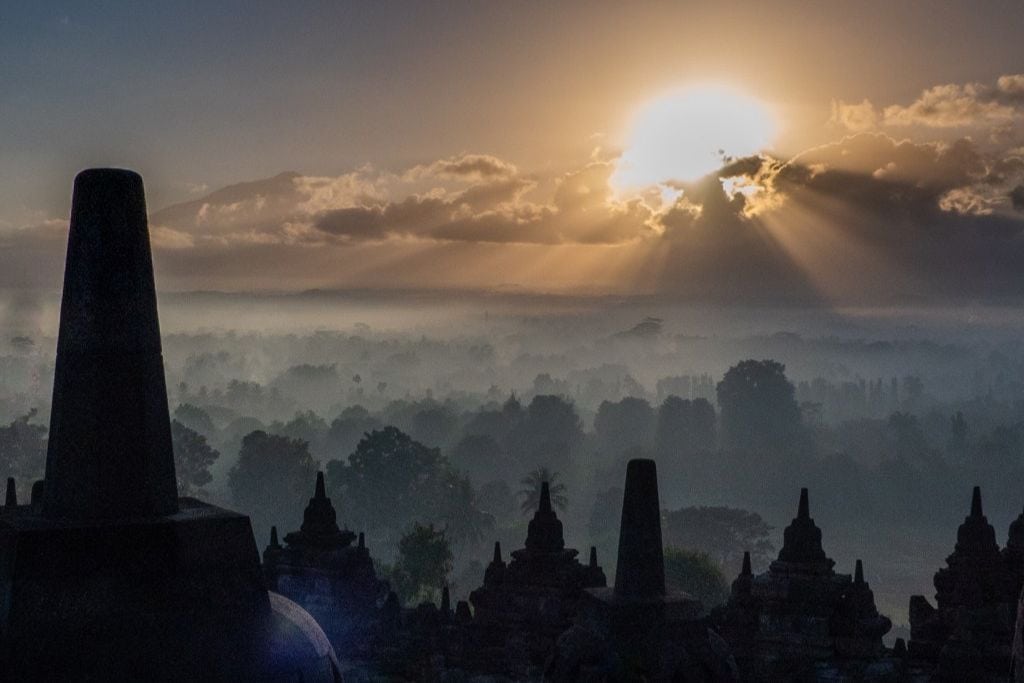

Visiting Borobudur in 2026 is not just a travel plan — it’s an invitation to pause, reflect, and reconnect. Nestled quietly in the green heart of Central Java, this 9th-century Buddhist monument offers far more than its staggering scale and stone carvings.
Every pathway, stupa, and sunrise moment is woven with meaning, shaped by centuries of devotion and silent meditation.
As modern life grows louder and more restless, Borobudur stands as a sanctuary of stillness — a place where travelers come not to consume, but to feel.
After two years of living in Canggu, Bali, I’ve been to Borobudur Temple multiple times, and it’s always a favorite of mine, especially in the early mornings.
The place feels special — as it is an ancient spiritual site that radiates a truly unique energy, referring to a deep emotional and sensory experience that’s hard to explain logically but is very real when you’re there
This article is all about why Borobudur is considered a spiritual hub, where it’s located, and the best spiritual activities and sites to explore in and around the temple.
Where is Borobudur Located?
Borobudur is located in Central Java Indonesia, near the town of Magelang. It sits about 40 kilometers (25 miles) northwest of Yogyakarta, which is the nearest major city and cultural hub in the region.
It is surrounded by green rice fields, palm trees, and a backdrop of volcanic mountains, including Mount Merapi.
Historians believe Borobudur was carefully built on a high plain between two rivers — the Progo and Elo — symbolizing a sacred space between the earthly and the spiritual.
Despite its age, Borobudur is very accessible today. Most travelers base themselves in Yogyakarta, which offers plenty of hotels, local experiences, and good infrastructure.
Why is Borobudur so Spiritual?

The spiritual power of Borobudur doesn’t stem from myths— it comes from intention, design, and centuries of human devotion.
Built in the 9th century during the Sailendra Dynasty, Borobudur is the largest Buddhist temple in the world, yet it has no inner chambers, no altars, and no walls enclosing it.
Instead, it rises openly into the sky, like a three-dimensional prayer. Its entire design reflects the path to enlightenment, turning every step into a spiritual lesson.
What Makes the Structure of Borobudur so Spiritually Symbolic?
The core of visiting Borobudur lies in understanding its levels. The temple consists of nine stacked platforms — six square, three circular — topped with a central dome.
These layers represent Buddhist cosmology. The base is Kamadhatu, the world of desire. The middle terraces are Rupadhatu, the world of form. The uppermost levels are Arupadhatu, the formless realm of spiritual liberation.
Every step upwards symbolizes a shift in consciousness — from the physical world to the spiritual realm.
Why are the 2,600 Stone Reliefs so Important When Visiting Borobudur?
One of the most remarkable aspects of visiting Borobudur is the sheer detail carved into its surface. More than 2,600 relief panels tell stories from Buddhist teachings — a visual journey that stretches over 5 kilometers.
These carvings aren’t ornamental. They serve as silent teachers, offering wisdom, warnings, and reflections on life’s deeper meaning.
Pilgrims traditionally walk clockwise around each level, reading the walls like scripture, using the temple as both a classroom and a mirror.
Is Visiting Borobudur Only for Buddhists or Spiritual Travelers?
You don’t need to belong to a particular religion or belief system to feel something here. Visiting Borobudur invites reflection, regardless of background. It’s not about converting. It’s about slowing down.
The silence of the place, the symbolism in its design, and the energy in the air speak to anyone open enough to listen.
Many travelers describe it as the most peaceful part of their entire trip — not because of what they did, but because of how they felt.
Best Spiritual Things to Do When Visiting Borobudur
Here is a list of the best spiritual things to do beyond Borobudur.
#1. Meditate

Many visitors come to Borobudur to meditate and absorb the peaceful energy that pervades this sacred site. Enjoying meditation here, especially at sunrise, can be a profound spiritual enlightenment experience.
The early morning light illuminating the intricate carvings and statues helps in focusing the mind and enhances the meditative experience.
This reminded me of my early morning meditation at Mount Batur in Bali, where the sunrise felt just as sacred.
Borobudur has been a religious site for more than 1,200 years, so you can feel the spiritual energy when you allow your mind to be calm.
#2. Visit the Famous Chicken Church
The Chicken Church, officially known as Gereja Ayam, is a unique attraction near Yogyakarta, located just a few minutes from Borobudur.
Originally built as a prayer house for all faiths, it’s nicknamed for its resemblance to a giant chicken, though it was intended to look like a dove.
Located atop a hill, it offers panoramic views of the surrounding Javanese forest, especially stunning at sunrise. Inside, visitors can explore colorful murals and diverse religious decorations, making it a fascinating spot for reflection.
#3. Walk the Pilgrimage Path
Follow the ancient pilgrimage noble eight-fold path circling the main temple from the earthbound base up to the top (clockwise direction), mirroring the spiritual journey from the mundane to the ultimate state of enlightenment.
This walk is designed to be a reflective journey, allowing you to contemplate life, spirituality, and the nature of enlightenment as you ascend through the temple’s various top levels.
#4. Explore the Surrounding Temples

The region around Borobudur is dotted with smaller temples and shrines that are worth visiting.
Among them, Mendut Temple, Prambanan, and Pawon Temple are closely related to Borobudur in terms of their historical and spiritual significance.
This kind of temple-trail experience is much like exploring Bagan in Myanmar, where hundreds of pagodas tell their own spiritual story
#5. Join a Vesak Ceremony
If your timing aligns, plan your visit during Vesak, the annual celebration of the Buddha’s birth, enlightenment, and death.
Thousands of monks, nuns, and devotees gather at Borobudur to chant, pray, and release sky lanterns. It’s deeply moving — not because it’s theatrical, but because it’s sincere.
You’re witnessing faith in its purest form, and being part of that moment can be a powerful experience, even as an outsider.
#6. Reflect on the Relief Panels
The walls of Borobudur are a visual scripture. Over 2,600 narrative panels illustrate Buddhist teachings, from the life of the Buddha to moral tales about kindness, patience, and compassion.
Take your time with these. Let your eyes scan the details, and think about what they might have meant to those who carved them over a thousand years ago.
It’s a reminder that human struggles — and hopes — have always been the same.
#7. Sit Among the Stupas
When you reach the upper circular terraces, take time to sit quietly among the 72 stupas.
Each one holds a meditating Buddha, and being surrounded by them brings a strange kind of peace — as if you’re part of a moment that’s been repeating itself for centuries.
You don’t need to chant or do anything special. Just sitting, breathing, and letting the silence wrap around you is enough.
#8. Engage with Local Culture
Engage with the local community to learn more about Javanese customs and traditions that are intertwined with the spiritual history of the temple of Borobudur.
Cultural performances, local crafts, and traditional Javanese cuisine offer a deeper connection with the spiritual and historical context of the area.
Yogyakarta is an incredible city known for its arts, diverse culture, and historic architecture. Take your time to explore, get to know the culture, and immerse yourself in the spirituality.
Best Time for Visiting Borobudur

The ideal time for visiting Borobudur depends on the weather and the type of experience you’re seeking.
The dry season, which runs from April to October, has plenty of sunny days that are excellent for clear, unobstructed views of the temple and the surrounding landscape.
For those looking to capture the ethereal beauty of Borobudur at sunrise, visiting during the dry season is particularly recommended. However, this period can also be very crowded, especially around June and July, when most tourists come to visit.
If you prefer a quieter visit and don’t mind a bit of rain, the rainy season from November to March provides a vibrant backdrop, though you’ll need to be prepared for occasional showers.
Visiting during the shoulder months of March or October can offer a good balance of mild weather and fewer tourists.
Best Restaurants in Borobudur
While the area surrounding Borobudur Temple is best known for its serenity and sacred atmosphere, there are still a handful of quality dining spots that beautifully complement the spiritual experience of your visit.
Below are three standout options, that you should try.
#1. Stupa Restaurant by Plataran
Set within a traditional Joglo-style building, this restaurant is known for its elegant take on Javanese cuisine, blending authentic flavors with refined presentation.
Dishes like Ayam Kampung Bakar (grilled village chicken), Sayur Lodeh (coconut milk vegetable stew), and freshly steamed rice are served in generous portions, ideal for those seeking nourishment with a local twist.
Surrounded by rice fields and distant mountain views, the ambiance is peaceful and naturally luxurious.
#2. Manohara Café & Eatery
Located within the Borobudur Park complex, Manohara Café is one of the most convenient places to eat, especially if you’re visiting the temple early in the day.
While the menu is simpler than other upscale restaurants, it offers a mix of Indonesian staples and Western favorites like Nasi Goreng, fresh fruit platters, and sandwiches.
Their coffee and traditional herbal drinks (jamu) are especially refreshing after a morning walk around the monument.
The main attraction, however, is the view — you can enjoy your meal while looking directly at Borobudur Temple, framed by trees and soft morning light.
#3. Patio Colonial
For those craving a mix of Indonesian tradition with a colonial touch, Patio Colonial offers an elegant yet relaxed dining experience inside the Plataran Heritage Hotel Borobudur.
The interiors are reminiscent of Dutch-Indonesian colonial homes, with large windows, vintage chandeliers, and polished wooden furniture — creating an atmosphere that’s both nostalgic and tasteful.
The menu includes dishes like Sop Buntut (oxtail soup), Udang Balado (spicy prawns), and a selection of Indonesian desserts like Klepon and Es Campur.
The restaurant is also known for its excellent tea and coffee service, making it a lovely midday stop or even a quiet dinner spot after sunset.
Where to Stay When Visiting Borobudur?
There are numerous accommodation options around Borobudur to suit various budgets and preferences.
I would also recommend checking options in Yogyakarta, which is close by and has a much larger hotel selection.
#1. Plataran Borobudur Resort & Spa:
This resort offers an unforgettable stay that blends comfort, culture, and proximity to Borobudur.
It is surrounded by thick teak forests, rice paddies, and rolling hills, making it feel completely immersed in nature.
The architecture and interior design follow traditional Javanese styles, with carved wooden details, earthy tones, and open-air spaces that blend seamlessly into the landscape.
And for those interested in wellness, the resort also offers yoga sessions, guided meditation, and cultural activities, making it ideal for spiritually minded travelers.
#2. Manohara Hotel:
Tucked within the Borobudur Temple Park complex, it’s the only accommodation located directly on the temple grounds.
What makes Manohara special is the atmosphere — quiet, respectful, and surrounded by gardens, trees, and views of the stupas in the distance.
The real highlight, though, is the sunrise tour. Hotel guests can join a guided walk in the early morning hours, accessing the temple through a private entrance.
#3. Rumah Dharma:
What sets Rumah Dharma apart isn’t luxury or size. It’s the simplicity, warmth, and sincerity that defines every part of your stay.
Rooms are styled in traditional Javanese architecture, featuring wooden interiors, earthy tones, and open-air bathrooms that connect you to the natural surroundings without sacrificing comfort.
One of Rumah Dharma’s most appreciated features is its proximity to Borobudur Temple, especially for travelers planning a sunrise visit.
For those seeking a spiritual experience, Rumah Dharma naturally encourages mindfulness.
#4. Ubu Villa Borobudur:
For those seeking privacy and luxury, Ubu Villa Borobudur is one of the most refined choices in the area.
Guests enjoy personalized service, with staff often arranging sunrise temple visits, private dinners, and even in-villa wellness treatments on request.
What truly sets Ubu Villa apart, however, is the uninterrupted view of Borobudur Temple and the surrounding Menoreh Hills and volcanic peaks, including Mount Merapi.
For couples, solo travelers, Ubu Villa Borobudur delivers both serenity and sophistication.
My Personal Experience in Borobudur

For me, I instantly felt a personal connection to this beautiful place, and meditating here was an unforgettable spiritual experience.
In the early morning, you can hear the morning prayer from the nearby mosques, which creates a mystic soundscape, which combined with being surrounded by ancient walls, will give the experience even more depth and character.
I felt like I was truly in an ancient place that has been used as a place of prayer for decades. I left feeling rejuvenated and closer to myself and the universe than before.
Borobudur is an incredible place to visit and an all-time favorite of mine. I would recommend it to any Indonesia traveler and especially those interested in spirituality and getting to know historic places.
While the temple can be crowded, it’s still possible to enjoy it in peace and have a profound experience you won’t soon forget. If you’re looking for an experience unlike any other, you’ll love visiting Borobudur.
If spiritual travel excites you, I’ve also written about places like the Lost City in Colombia and the Amazon Rainforest, which offered powerful moments of inner reflection.
Borobudur FAQs
How to Get to Borobudur?
Borobudur is accessible by road from major cities on Java.
If you’re starting your journey from Jakarta, you can take a flight to Yogyakarta, the nearest major city with an airport. From either city, Borobudur is about a 1.5-hour drive.
Public buses and trains are available from major cities to Yogyakarta, from where you can take a public bus, rent a car, or hire a taxi to reach Borobudur.
For a more direct route, consider renting a car or scooter or booking a private shuttle that can take you directly to Borobudur from Yogyakarta.
This is especially convenient if traveling in a group or if you want to explore the area more after visiting the temple.
What is Borobudur?
Borobudur is a 9th century Buddhist temple in Magelang, Central Java, Indonesia, known for living beings one of the world’s largest Buddhist temples with its massive structure and intricate stone reliefs panels.
Why is Borobudur Considered a Spiritual Place?
The main temple is considered spiritual due to its design as a mandala, symbolizing the Buddhist cosmology and the path of enlightenment.
It guides visitors through a journey from the earthly realm of desire to ultimate liberation.
When is the Best Time to Visit Borobudur?
The ideal time is during the dry season from April to October, which has favorable weather for exploring the temple complex and witnessing the sunrise.
Can I Visit Borobudur At Sunrise?
Yes, Borobudur is particularly magical at sunrise. A special sunrise ticket allows early entry before regular visiting hours, offering a peaceful and illuminating experience.
Where Should I Stay When Visiting Borobudur?
Options range from the luxurious Plataran Borobudur Resort & Spa to the unique experience of staying at Manohara Hotel, which offers direct access to the temple at sunrise.
What should I bring for a spiritual visit to Borobudur?
Bring comfortable shoes, water, a scarf or shawl for modesty, and a notebook or journal if you enjoy writing down reflections. If visiting at sunrise, bring a light jacket and your full attention — leave distractions behind.
Are there guided spiritual or meditation tours available?
Yes. Several local guides and wellness retreats near Borobudur offer meditative walks, sunrise tours, and even silent retreats. You can also join Vesak celebrations in May for a rare spiritual group experience at the temple.
Final Thoughts: Spiritual Guide To Borobudur
Every traveler comes to Borobudur with different questions. Some are searching for peace. Others want perspective. A few don’t even know what they’re looking for.
Borobudur doesn’t rush to give answers. It simply opens its space to you, and lets you find what you need at your own pace.
You walk up its steps not just to see a view, but to let go of something heavy. You move through its silence not to escape the world, but to reconnect with what matters in it.
And by the time you reach the top, you realize: this wasn’t a tourist stop. It was a turning point — quiet, steady, and deeply personal.
So when you leave, don’t rush. Look out at the mountains. Breathe. Because the real beauty of Borobudur isn’t just what you see — it’s what follows you long after you’ve gone.
Sabiduri Planning Guide
🧘🏽♀️Where to find spiritual retreats around the World?
The good news is that they can be found in various locations, from secluded places in nature to bustling cities. Find your ideal retreat here!
🚑 Should you buy a travel insurance?
100% YES! — With basic coverage averaging just $50 for your stay, enjoy peace of mind with a plan from Travel SafetyWing, one of the biggest names in travel insurance.
🚗 Is it safe to rent a car around the World?
Yes — Renting a car is one of the best ways to see the country you find yourself in because public transportation cannot reach everywhere! I always rent with Discover Cars, which checks both international companies and local companies, so you get the best rates.
📴 Will my phone work abroad?
Maybe — It depends on your company, so check with your provider. If you don’t have a free service, buy a SIM Card once landed in the country.
🛌🏼 What’s the best way to book my accommodations?
For hotels, Booking is the best site, but for hostels, use Hostel World. If you’re considering Flats, don’t forget to also check Couchsurfing, which is free and you stay with locals.
🛩️ What’s the best site to buy flights?
For finding cheap flights, I recommend Kayak.
🛂 Do I need a visa for these destinations?
Likely Not — U.S., Canadian, and most European Passport holders don’t need a visa for most of destination around the World. BUT check here for more travel requirements. The majority of travelers will receive a 90-Day stamp Tourist Visa upon arrival.