Luxor City in Egypt: Is it Worth Visiting?

Luxor is more than just a city—it’s the beating heart of ancient Egypt.
When you step into Luxor, you’re walking through history itself, surrounded by towering temples, intricate tombs, and monuments that have withstood the test of time for over 3,000 years.
I still remember the wonder I felt when I first gazed upon the grand Karnak Temple and stood in front of the Valley of the Kings.
In this 2025 guide, I will talk about Luxor City in Egypt and why it is so important today—culturally, spiritually, and historically—and why it continues to draw travelers and historians alike.
Luxor Egypt Location on Map
Luxor, known as the “world’s greatest open-air museum,” is a city of immense historical and spiritual importance.
Located in the south of Upper Egypt, Luxor lies on the east bank of the Nile River.
It is positioned approximately 650 kilometers (404 miles) south of Cairo, the capital city of Egypt, and about 240 kilometers (149 miles) north of Aswan, the city along the Nile.
The city’s strategic location along the river has been central to its development as a political and religious hub throughout history.
Luxor’s Spiritual Geography
Luxor’s location on the Nile also plays a crucial role in its spiritual significance.
The river was considered the lifeblood of ancient Egypt, and the east bank of the Nile, was believed to be the realm of the living. This is where the grand temples were built, symbolizing life, birth, and the gods’ power.
On the opposite side of the Nile, the west bank of Luxor was associated with the realm of the dead, where the Valley of the Kings and the Valley of the Queens lie—final resting places for Egypt’s pharaohs and nobles.
The duality of Luxor’s geography, with its connection to both life and death, adds to the city’s religious and spiritual importance.
Why is Luxor so Important?
After I booked my Egypt trip and started planning my itinerary, the mystical allure of Luxor was too much.
The city, which is known for its famous pharaohs, grand temples, and sacred belief rituals has everything that I was first attracted to with ancient Egypt.
The importance of Luxor’s history becomes clear when you head to the desert and start discovering the historic clues from the former capital.
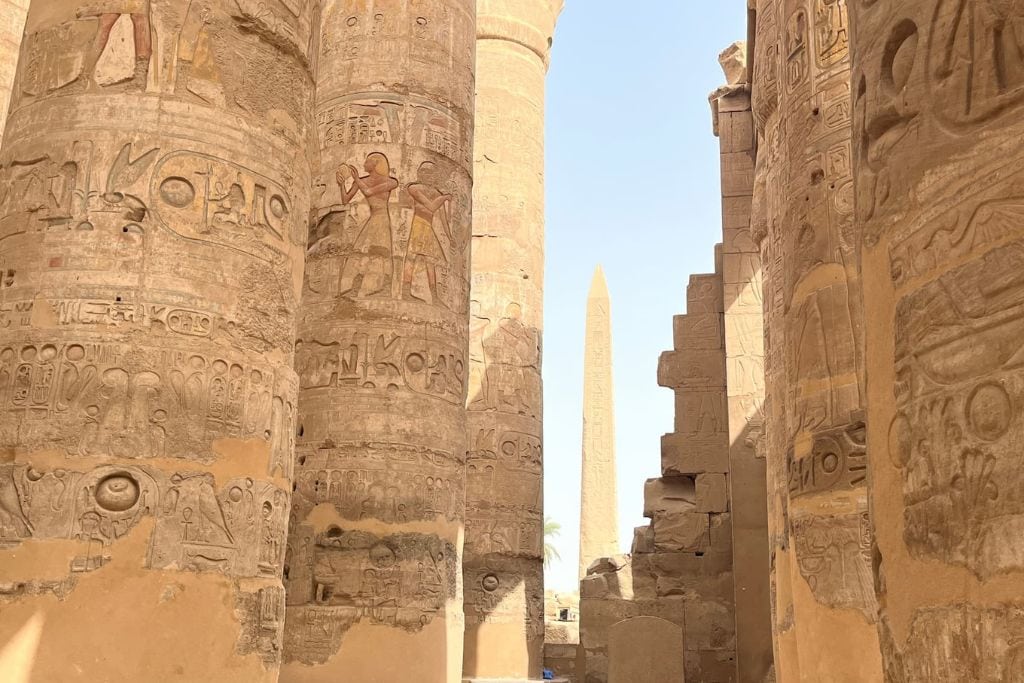
A big factor about Luxor which makes it appealing is its abundance of ancient relics, which make it the so-called ‘greatest open-air museum’ in the world.
I would agree with this statement, as there was no shortage of ancient surprises in store during my exploration of the city.
Luxor is a special city full of symbolic landmarks, and Temple is one which was very sacred to the ancient civilisations, as it connected them to the promised afterlife, which was a significant aspect of Egyptian mythology, thousands of years ago.
Luxor stands as a evidence to the grandeur of ancient Egypt, much like the Nazca Lines in Peru reflect the incredible mystery of early cultures.
Why was the Luxor Temple built?
The temple of Luxor was built as a place of worship, but also as a place where pharaohs could be crowned and lauded by the locals, usually at the annual religious festivals.
The annual ‘Opet Festival’ was held for centuries and was focused on rebirth and the renovate of pharaohs and gods.
The religious festival was held around the same time that the Nile flooded the city, which brought rich soil to the city, so it coincided with the healing and new beginnings in the city.
What are the Major Attractions in Luxor?

Luxor City in Egypt is abundant with ancient landmarks and attractions that are globally famed, and draw in millions of international tourists annually.
The best things to do in Luxor are a mixture of ancient temples, royal tombs, museums and world class restaurants.
The best way to enjoy Luxor is to split your exploration into two days, with each day covering the different banks of the river Nile.
A longer trip to Luxor is recommended if you want to really dip yourself in the history of the city, however, you can still see many of the great sites in two days.
This two day itinerary is based on a shorter style trip, therefore, it doesn’t offer too much time for relaxation.
Day 1 – East Bank Temples, Luxor Market, and Egyptian Musuem
On day one, you will stick to the East Bank side of the city, with many of the sites within walking distance of each other.
1. Mummification/Luxor Museums

Your first experience of Luxor should be the museums, so you can learn about the history of Luxor, and why Luxor is important, before you visit the ancient gems of the city.
This definitely helped to deepen your understanding of the way that the ancient civilisations used their temples and necropolis sites.
The Main Corniche of Luxor is home to the Mummification Museum, which is small in size, but immaculate in condition and shows the art of mummification excellently.
There are many original mummies of both humans and animals on site. The crocodile and baboon were my two favourites!
The Luxor Museum is larger in size, and on its two floors it focuses on everything from the city’s mesmerising past. You will find both museums within 750 metres of each other on the banks of the Nile, and both have cheap entrance costs.
2. River Nile Felucca Ride
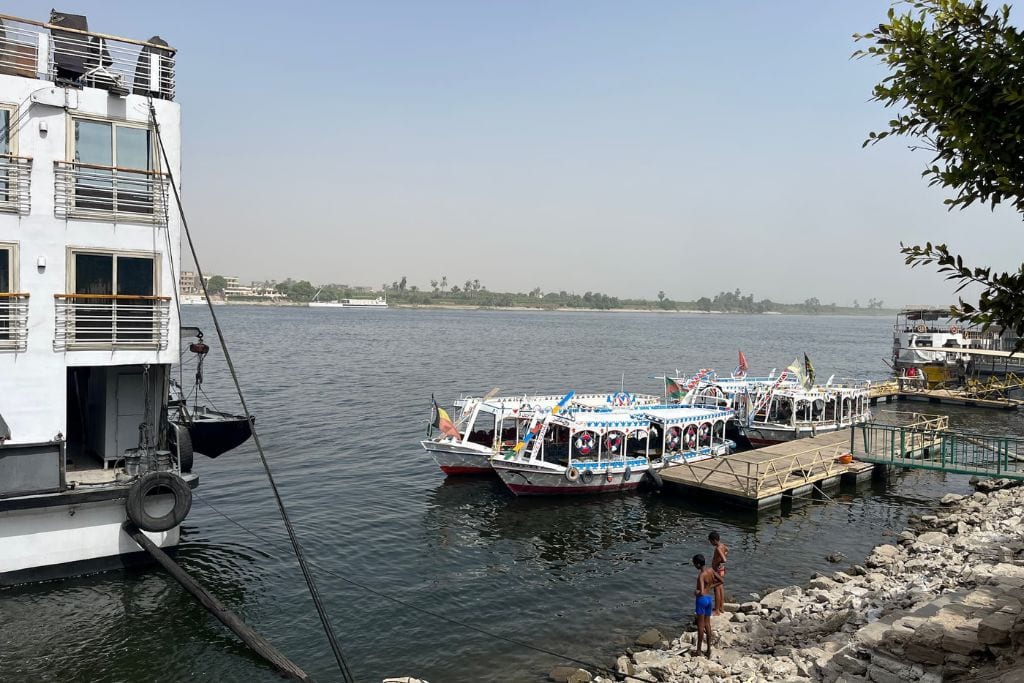
While you are on the main corniche of the city, you will spot many locals offering felucca rides/Nile cruise trips, ranging from one hour to multiple days.
You may have to negotiate with the locals to grab a bargain, however, there is an abundance of local sailors for you to barter with. Sailing on the Nile in one of the most historic cities ever was an awesome experience!
An experience of sailing on the Nile will be available to you in most of the main cities in Egypt, so if you can’t squeeze it in here, you will have other opportunities to do so.
3. Temple of Karnak

The Karnak Temple complex is one of the biggest draws for global tourists in Egypt, as it is one of the largest places of worship ever built.
Interestingly, Karnak Temple was developed over a 1000 year period by many different Pharaohs, so as you can imagine, it still holds elegance, even after thousands of years.
None more so than the Great Hypostyle Hall, which is home to the temple’s famous columns. At 20 metres high, the colossal columns’ true scale is revealed when you walk around the hall.
They still have original detailed carvings on them, depicting Ancient Egyptians daily life.
You can reach the Karnak complex by taxi, tuk tuk, horsecart, or in cooler months, you can walk, as it is only a few km from Luxor Temple.
4. Temple of Luxor

After Karnak, you should head to Luxor Temple to enjoy an Egyptian sunset on the banks of the Nile. You can walk along the Avenue of Sphinxes directly from Karnak if the weather is kind to you.
The 2.7km walkway directly connected the two East Bank temples in ancient times, and was used by royalty for annual festivals and processions.
Although it doesn’t still have the elegance of yesteryear, I found walking along it fun, and there are still many of the original sphinx statues flanking the walkway. It has been open to visitors since 2021.
My highlight at Luxor Temple was the massive Pylon entrance, which is guarded by giant colossi statues and sits behind a 20 metre high ancient obelisk.
I would recommend hiring a tour guide for this temple, so each area can be explained to you in detail as you wander around.
The temple has had direct influences on its construction and development from Alexander the Great, Tutankhamun, and Pharaoh Amenhotep III.
5. EL Souk

What better way to end your evening than experiencing the true essence of Egyptian culture at EL Souk (Luxor Market). I visited through the day and night, and the evening experience is magical.
It is an attack on your senses with the smells of local spice mixing with the sound of local market traders shouting as you walk by, all with the same goal of taking your money.
It can get intimidating if you don’t visit with an open mind, and with the aim of having a little fun. Bartering and negotiating for souvenirs is expected, so never take the first offer!
I found some beautiful papyrus bookmarks, which I got personalised with my name in hieroglyphics.
You should take some local currency in small denominations to strengthen your bargaining position.
It is only a short walk from Luxor Temple, so you can head here after enjoying the sunset there. There are also nearby restaurants for you to end your evening with some good food as you reminisce on an awesome day.
Day 2 – West Bank treasures
The Western Bank of Luxor is home to the renowned Valley of the Kings, where 63 tombs of ancient Pharaohs spanning many dynasties have been discovered, along with two picture-perfect ancient temples.
You can enjoy the West Bank on the ground or from the air by hot air balloon.
If you are short of time, I recommend the ground option, as although a sunrise flight over the top of the sites is awesome, it doesn’t quite match coming face to face with the 3000 year old mummy of the most famous pharaoh of them all – King Tutankhamun!
Many official tours will include most of these West Bank sites combined during a day trip.
1. Hatshepsut’s Temple

The Temple of Hatshepsut is a three floored temple, which is well known for its architectural design of being built into the ‘Deir el-Bahri’ cliffs. The iconic structure was originally built in dedication to Queen Hatshepsut temple to show her life through art.
After her reign came to an end, the temple was damaged considerably by her successor ‘Thutmose III’, as he tried to ruin her legacy. Despite this, the temple still maintains its grandeur and postcard worthy aesthetics on its exterior.
My favourite part of the temple is the grand walkway approach which leads to the top floor of the temple.
Much of the interior has now gone as a result of time, however, there are still some original colossal statues and hieroglyphics. This is another temple where a Egypt tour guide is essential, if you want to grasp the full history of the place.
2. Valley of the King

The Valley of the Kings has been a captivating part of Luxor for centuries since it was first discovered in the late 18th dynasty.
Tombs have been discovered continuously through recent history, and 63 known tombs have now been found and identified so far, with ongoing excavations.
Visitors can only visit around 10 tombs currently, however, I was delighted to find out that you can visit King Tut’s tomb for a small fee, and his mummy is still on display.
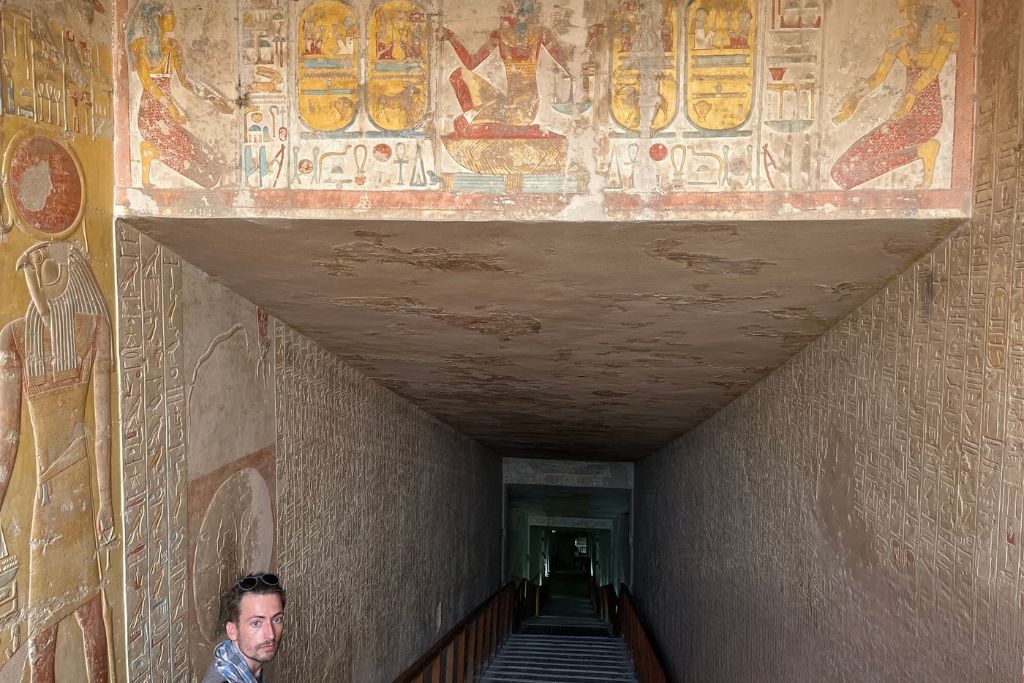
As you enter the royal tombs, they are all uniquely designed as their pharaoh requested in ancient times. I found it remarkable how well the art has survived over such a long period of time.
The most well preserved tomb on site is ‘KV17’ which was the final resting place of ‘Seti I’. The tomb offers a golden glow as the original art and decorations still maintain their vibrancy for visitors to enjoy.
It does cost a small fortune to go and visit his tomb, but it is definitely worthwhile, as it offers another clue as to how important the pharaohs of Egypt were.
3. Medinet Habu Temple

An underrated treasure in Luxor is Medinet Habu, which is an awesome vast temple complex off the beaten track on the West Bank. Medinet is not on many visitors’ radar, but it should be!
Its main feature is the Mortuary Temple of Ramses III, which dates back to the New Kingdom period of ancient Egypt, and is famous for its intricate carvings depicting the battle victories of Ramses III during his reign.
As soon as we pulled up at Medinet Habu, I noticed the First Pylon entrance which has a giant carving of Ramses III in action in battle. This was a unique feature of his temple that differs greatly to the other Luxor temples.
There are also coloured hieroglyphics throughout this magnificent temple complex, which are the best-preserved temples of Egypt.
When booking an official tour, you should look out for ones that include Medinet Habu, so you can experience the same pleasant surprise that I did.
If you are on a longer trip to Luxor, you can also add the Valley of the Queens and the Colossi of Memnon to your West Bank itinerary, along with a hot air balloon ride at sunrise.
The 8-day Ancient Egypt Shamanic Wisdom Journey offers spiritual heritage of Egypt. Participants will explore iconic sites like the Pyramids of Giza and the Sphinx, engage in shamanic rituals, and experience the sacred energy of ancient temples.
The journey includes guided meditations, ceremonies, and opportunities for personal reflection, all set against the backdrop of Egypt’s timeless landscapes.
What is the Best Time to Visit Luxor?
Luxor reaches incredibly high temperatures all year round due to its geographical location in Upper Egypt. It is located inland with a desert landscape, away from the Egyptian coastline. This means that you should plan accordingly.
Many of the West Bank archaeological sites are located next to cliffs which trap the heat, and make walking around the sites very difficult. The East Bank Temples are open air now, so don’t offer much protection from the sun either.
The Shoulder seasons of September, November, and February, and April are the months which offer slightly cooler temperatures, so the best option for most international tourists.
How to Get to Luxor?

The common Egypt itinerary follows the cities and beautiful temples down the Nile as far as Aswan, therefore, Luxor has great transport options with its location between Cairo and Aswan.
1. A Sleeper Train
I opted for the night train from Cairo as I wanted to experience an evening on an Egyptian train. It turned out to be more like a rollercoaster ride, as it bounced around the tracks, making the loudest noise!
The train rides go as far as Aswan, so this is a viable option, whether you are heading North or South to Luxor.
The costing of this option is quite expensive at just under £100 from Cairo to Luxor for a single cabin with a bed.
Click here to check the rates and availabilty.
2. A Nile Cruise
For longer Egypt itineraries, there is the option to cruise down the Nile from Cairo all the way down to Luxor. This can take up to two weeks, as most of the cruise ships stop at all of the highlights along the way.
You are looking at upwards of £75 per night for the majority of cruises. You can confirm your booking by clicking here.
3. An Internal Flight
Internal flights in Egypt are very reasonable if booked in advance, and only take around an hour to get between the main cities (and if you are wondering, yes there is luxor international airport). I did use this option from Aswan back to Cairo, and the service was very efficient.
My airfare from Aswan to Cairo cost around £70 for my flight.
Airfare from Cairo to Luxor is around £80 on average in popular months. Check the rates and availabilty by clicking here.
You can rent a car, or take the bus, however, the roads in Egypt are not maintained well, and there are no rules on the roads. This is an option I would not recommend for the majority of visitors to Luxor.
Best Restaurant in Luxor, Egypt
Luxor is home to many highly rated restaurants offering local and International cuisine.
I noticed most of the packed restaurants were located on the East Bank side of the city, however, some of the best rated hotels on both sides of the Nile are home to world class restaurants also.
If you want an authentic experience, for both food and ambience then ‘Sofra Restaurant’ is a great option. It is packed in the evening, so it requires pre-booking. Sitting in the upstairs terrace offers laidback vibes and a chilled atmosphere.
Sofra is within walking distance of Luxor Temple, Luxor Market, and the train station.
Best Hotels in Luxor
A unique aspect of the city of Luxor is how it is split across two banks of the river Nile.
1. East Bank
The East Bank side is the livelier side of the city, with most of the accommodation options dotted in between the local shops, restaurants and market.
The benefits of staying on the East Bank is the close proximity of the nightlife, activities, and Karnak Temple complex and Luxor Temple.
A drawback is the noise of the surrounding area, which is constant all around the clock.
- Luxury Hotel: Steigenberger Nile Palace Hotel
- Mid Range Hotel: Lotus Luxor Hotel
- Budget Hotel: Bob Marley Hotel & Restaurant
2. West bank
The West Bank offers more tranquility, with the resort style accommodations sitting proudly on the same side of the Nile as the final resting places of some of the most famous pharaohs from ancient Egyptians.
Two of the main benefits of staying on the West Bank are the ease of reaching the main Luxor archaeological sites, and the shorter journey to the hot air balloon station which visitors must visit at dawn for the full experience.
If you want the best restaurants, or need the railway station, they are on the East Bank, so this can be a drawback.
- Luxury Hotel: Sofitel Winter Palace Luxor
- Mid Range Hotel: IN Luxor Nile Apartments
- Budget Hotel: Nile Roof Hotel & Restaurant
My Personal Experience in Luxor
With many interactions with the local Egyptians (some good & some bad), and as I stayed right in the centre of the East Bank at the Bob Marley Hotel & Restaurant, there was a frantic vibe throughout my trip.
However, this made my trips to the iconic temples and tombs a welcome break, and added some peace and quiet, as I was in awe of the grand ancient relics.
There is something extra special about wandering down the same walkways that some of the most powerful people in Egyptian history have walked down, many lifetimes ago!
There are places to escape the commotion of the city, especially in the rooftop restaurants which seem to block out most of the noise, except for the call to prayer, which echoes around the city throughout the day.
There is no doubt that I found Luxor full on, but still very rewarding. A shorter itinerary still allows room for the main highlights of the city, and only offers a smaller dose of the chaos.
FAQs about Luxor
Is Luxor the Oldest City in the World?
Luxor, which was previously known as ‘ancient Thebes’ when it was the thriving capital of Egypt, is one of the oldest inhabited cities in the world dating back to 2,150 BC, making it over 4100 years old.
However, Damascus in Syria is said to be closer to 11,000 years old and takes top spot.
What Is the 3 Oldest City in the World?
The three oldest cities in the world are Damascus, Syria. (11,000 years old), Aleppo, Syria (8000 years old), and Byblos, Lebanon (7000 years old).
Why was Luxor abandoned?
Luxor declined after the fall of the New Kingdom due to shifting political power, the rise of Christianity, and the shift of Egypt’s capital to Cairo.
Many of its ancient sites were abandoned or repurposed, though the city itself was never completely deserted. Today, it’s a key archaeological site.
Is It Safe to Visit Luxor?
It is no secret that Luxor, and other major cities in Egypt have had problems historically, with terrorism, amongst other issues, however, during my visit, I didn’t encounter any safety concerns.
There are security scanners at all the famous sites, and armed police dotted around both the West Bank and East Bank of the city.
Is the Sphinx in Cairo or Luxor?
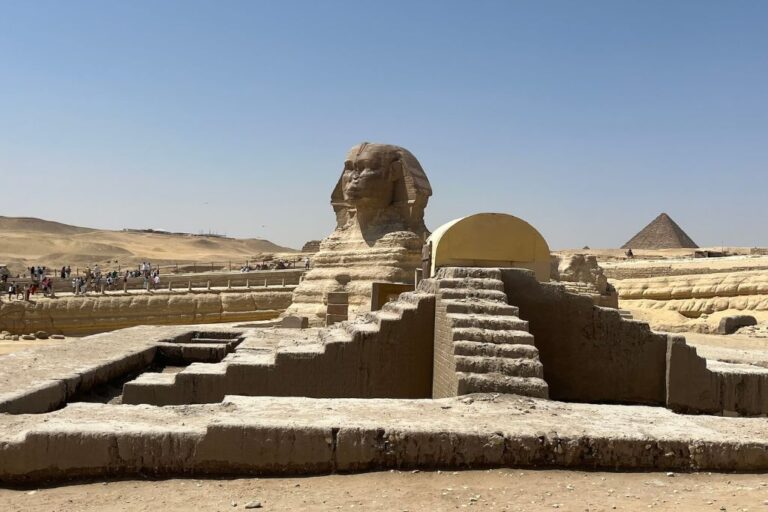
Although there are many great sphinx statues in Luxor, across its many famous landmarks, the most famous, and globally famed statue is located in Giza, which is just outside of Cairo.
Is Luxor Egypt Worth Visiting?
Luxor is an awesome city, which is chaotic and charming in equal measure.
One moment you can be in complete solitude, enjoying tranquility of the Great Hypostyle Hall at Karnak Temple complex, or deep inside the tomb of one of the Earth’s greatest historical characters.
Next, you are dodging the chaotic traffic, riding a horse cart, or enjoying a feast in one of Egypts’ finest authentic restaurants.
I will never forget the ‘choo’ of the Cairo night train as it pulls up into the ancient city’s train station just after dawn each morning, as the sound reverberates around the city.
There is no doubt that Luxor is worth it, and it can be enjoyed in many different ways.
If you want to explore more spiritual splaces, read our articles about Cusco Mysticism in Peru, Guatemala’s Ancient Mayan City, and Haleakalā Volcano Hawaii.

Author: Tom
Tom is a UK based travel blogger and the founder of Tom Henty’s Travel. He has a curiosity of all things travel and loves exploring new destinations through dark tourism, street art and historical landmarks.
Sabiduri Planning Guide
🧘🏽♀️Where to find spiritual retreats around the World?
The good news is that they can be found in various locations, from secluded places in nature to bustling cities. Find your ideal retreat here!
🚑 Should you buy a travel insurance?
100% YES! — With basic coverage averaging just $50 for your stay, enjoy peace of mind with a plan from Travel SafetyWing, one of the biggest names in travel insurance.
🚗 Is it safe to rent a car around the World?
Yes — Renting a car is one of the best ways to see the country you find yourself in because public transportation cannot reach everywhere! I always rent with Discover Cars, which checks both international companies and local companies, so you get the best rates.
📴 Will my phone work abroad?
Maybe — It depends on your company, so check with your provider. If you don’t have a free service, buy a SIM Card once landed in the country.
🛌🏼 What’s the best way to book my accommodations?
For hotels, Booking is the best site, but for hostels, use Hostel World. If you’re considering Flats, don’t forget to also check Couchsurfing, which is free and you stay with locals.
🛩️ What’s the best site to buy flights?
For finding cheap flights, I recommend Kayak.
🛂 Do I need a visa for these destinations?
Likely Not — U.S., Canadian, and most European Passport holders don’t need a visa for most of destination around the World. BUT check here for more travel requirements. The majority of travelers will receive a 90-Day stamp Tourist Visa upon arrival.