The Silence Between the Monasteries: What Spiti Valley Taught Me About Stillness

The first time I stood outside Key Monastery and watched the valley breathe, I realized I had brought the wrong kind of luggage. I had arrived with a chest full of ambitions, deadlines, and carefully framed content ideas — and none of them seemed to fit the place.
Travelling to Spiti Valley taught me something I didn’t expect: sacredness often shows up as indifference. The mountains don’t try to convert you. Monasteries don’t pose for your camera. Instead, they offer a quiet mirror: come close, and you will see what you are carrying.
Over the years, I’ve traveled across Ladakh, Zanskar, and Spiti, and the monasteries in each region left different fingerprints on my mind.
In this piece, I want to tell the story of Spiti’s monasteries — the factual, the architectural, and the interior life they awoke in me — and then place them beside the monasteries of Ladakh and Zanskar to discover what each region teaches about faith, survival, and stillness.
What is Different About Spiti?
Spiti is a high, cold desert of stone and wind. Its monasteries are rarely grand spectacles arranged for visitors; they are stubborn, functional, weathered, and — most importantly — rooted in the rhythms of a harsh landscape.
Key Monastery (Kye Gompa), for instance, sits above the Spiti River and is the largest monastery in the valley; its complex of rooms, narrow corridors, and prayer halls has been built up, beaten down, rebuilt, and repaired across centuries.
The Monastery we see today is the result of repeated restorations across long cycles of fire, earthquake, and time.
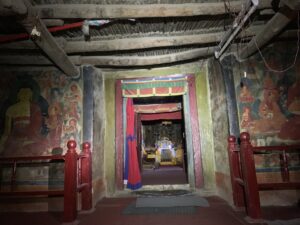
Tabo Monastery, downriver from Kaza, is sometimes called the “Ajanta of the Himalayas.” Founded in the 10th century, it contains an extraordinary collection of frescoes, sculptures, and wall paintings that trace the reintroduction of Mahayana Buddhism in the western Himalaya.
It is one of the oldest continuously operating Buddhist enclaves in the region.
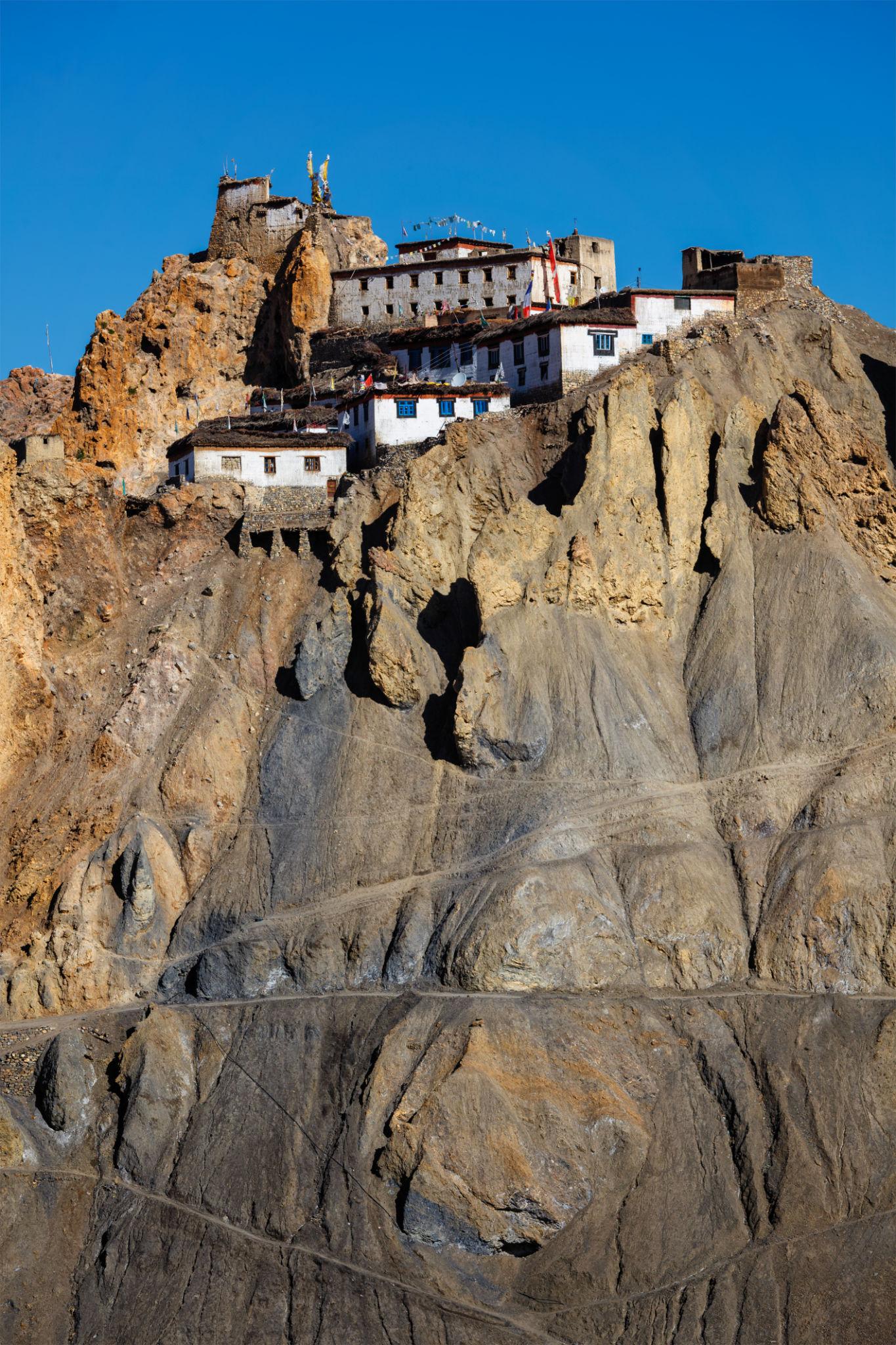
Dhankar, perched like a fortress on eroding cliffs above the confluence of the Spiti and Pin rivers, feels like a reminder carved into stone: faith here is not an adornment, it is a survival strategy. The gompa’s location — high and exposed — creates a visceral understanding that spirituality in Spiti is entangled with endurance.
Komic (Tangyud) sits closer to the sky; villages like Komic claim to be among the highest motorable villages on earth — a fact that makes pilgrimage here feel like a slow ascent into a thinning world.
There are other wonders — the mummy of Lama Sangha Tenzin preserved in Gue; the small, intimate chapels painted with stories; the chortens whose whitewashed domes punctuate the brown slopes.
Each of these places doesn’t beg to be visited; they are. And when you arrive, you are left to respond.
The Monasteries: A Deeper Look (And What They Taught Me)

Key Monastery (Kye Gompa) — The Layered Fortress Of Silence
Key is more than a building; it is an archive of rebuilding. Climbing its narrow stairways felt like walking up a spine made of rooms: prayer halls with butter-lamp smoke clinging to the corners, young monks moving between classes, and walls dense with murals and thankas.
Its altitude and presence make you feel like you’re intruding on a monastery that has always been indifferent to guests — a liberating indifference.
Kem monastery had survived raids, fires, and earthquakes; it had learned not to dramatize survival. When you internalize that kind of quiet persistence, your own anxieties about performance begin to seem trivial.

Tabo Monastery — The Slow Library of Murals
Walking into Tabo’s ancient assembly halls is like entering a living manuscript. Its murals — painted across walls for centuries — carry the history of a lost political and religious network, telling stories of translators, kings, and wandering lamas.
There’s a sense of devotion that is patient and sustained, a centuries-long conversation between painter and devotee.
Tabo doesn’t offer Instagram-sized revelations. Its teachings are in the slow accretion of image and ritual: long-term practice over instant transformation.

Dhankar — Faith On the Edge
Dhankar’s precarious perch makes theology literal: the Monastery clings to the cliff, looking out over an entire valley. There’s a kind of Buddhist bravado here — a fierce commitment to continuity despite erosion, both geological and cultural.
Visiting Dhankar teaches you about resilience and witness. Dhankar made me see spirituality as a structure that must hold up to the weather of life. It is a practice of showing up, day after day, even when the slope beneath you is shifting.
Komic / Tangyud — Altitude As A Spiritual Prompt
Komic’s altitude isn’t merely a statistic; it is a sensory teacher. The thin air, the slow steps, the small population — these reduce the volume of life until you can hear the matrix of your own thinking.
Gue — The Strange Intimacy Of Death Preserved
The small village of Gue houses a preserved body of Lama Sangha Tenzin, discovered in the 1970s — an eerie, intimate relic of devotion. It’s a reminder that these valleys have their own timelines for life and death, preservation and memory.
In Spiti, death is another weather pattern; for someone used to dramatized grief, this ordinary presence of mortality was strangely peaceful.
Spiti, Ladakh, Zanskar: A Comparison of Monastic Personalities
Over the years, I’ve been in all three places. Here’s how their monastic cultures felt different to me — not to argue over which is “more spiritual,” but to see how geography, history, and contact with the outside world shaped religious atmospheres.
Ladakh: Ceremonial Grandeur and Community Performance

Monasteries in Ladakh — Hemis, Thiksey, and Lamayuru village — are often larger, better organized for visitors, and host spectacular festivals (the Hemis festival being the most famous example) where masked dances, music, and ritual are staged in public celebration.
There is an outward vibrancy and a strong sense of institutional identity. This makes Ladakh magnificent and performative; spirituality is communal and visible.
Zanskar: Earned Seclusion and the Cave Monasteries

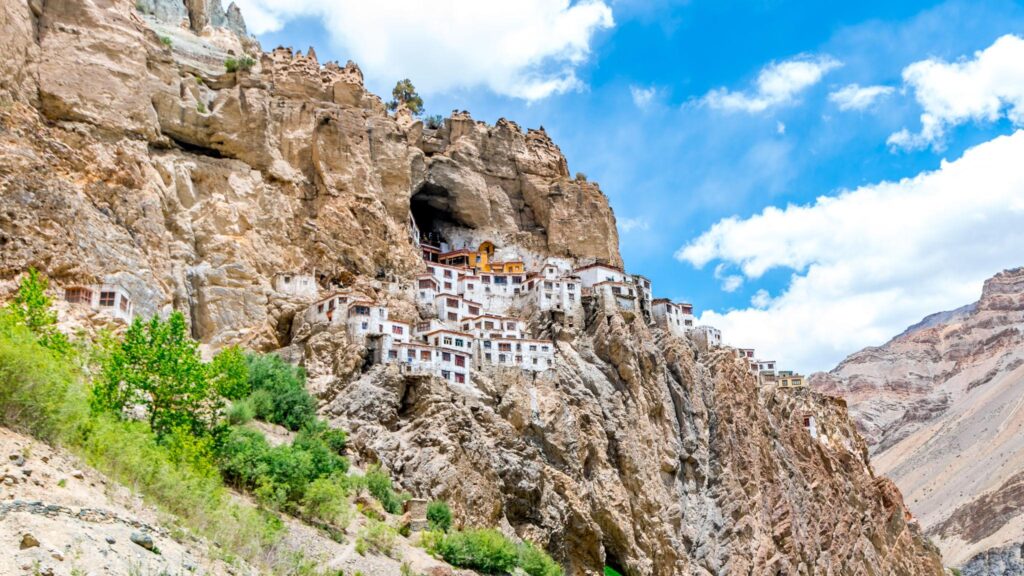
Zanskar’s Phugtal Monastery (the cave monastery) is the archetype: a place you have to work to reach. Zanskar’s terrain and climate make access difficult, which keeps the monasteries remote and their spirituality intimate.
There’s a sacrificial quality to visiting here; the effort of the journey is part of the devotional currency. Recent environmental pressures — glacier retreat, water shortages — have also started to strain these fragile communities, reminding visitors of how ecological change reshapes spiritual life.
Spiti: Indifference That Becomes Invitation
Spiti is neither performative nor entirely secluded. Its monasteries are practical, old, and often quietly eroding into the landscape. That indifference forces you to look inward.
There are no grand festivals designed for tourists (though local rituals persist), and that lack of spectacle removes the temptation to mistake a trip for transformation. Transformation here requires attention, time, and a willingness to sit with discomfort.
Deeper Reflections: What the High Desert Revealed About Me
Stillness is a practice, not a reward. I came expecting a sudden awakening. Instead, I found small, repeated practices: sitting in a corner of a prayer hall, listening to the heater crackle, noticing breath. Those repeated gestures wore grooves into me in a way a single “spiritual experience” never could.
Indifference can be many things — including kindness. When a place does not seek to please you, you are free to be honest with yourself. Spiti’s lack of hospitality theater became a kindness: it refused to flatter my ego.
Landscape is pedagogy. The cliffs taught me about balance; the wind taught me about surrender; the long, sunny days taught me how trivial most deadlines are when compared to the slow arc of seasons.
Caring for fragile culture is part of devotion. I came to enjoy the spiritual quiet, but Spiti is fragile. Climate shifts and infrastructural pressures are real, and preserving these monasteries is an act of reverence.
How to Visit With Intention (a short practice)?
If you want your visit to be more than “content” or a checklist, try this small practice at eacMonastery:
Arrive quietly. Leave your phone in your pocket for the first 10 minutes.
Sit for five deep breaths. Notice the quality of the air and your posture.
Observe without capturing. Walk a slow circle and allow one detail (a mural, a prayer wheel) to hold your attention for the whole visit.
Give something back. Make a small donation, buy a local offering, or spend a quiet hour helping with a simple task if the host allows.
These small gestures convert consumption into participation; they turn a tourist visit into a simple exchange.
The Ethical Question: Tourism and Fragility

Monasteries in these high valleys are alive — they are homes, schools, and culture keepers. Increased tourism brings income but also risk: wear and tear on structures, pressures on water and waste, and cultural commodification.
If you come, come with care: choose homestays, hire local guides, and stay longer rather than treating the valley as a tick-box.
The environment is changing — glaciers are receding, and villages once secure are seeing water stress. Monasteries that survived centuries of human and natural tumult now face the modern variables of climate and unsustainable tourism.
That sense of responsibility should be part of any traveler’s spiritual posture here.
Practical FAQs — Visiting Spiti and Its Monasteries
Below are practical answers for anyone who wants to go to Spiti with respect and readiness.
Best Time to Visit?
The main visiting window is late May to September when the high passes open. Early spring (May-June) is cool and dramatic; July–August can see summer rains and some landslips; September offers clear skies and quieter roads.
Winters are harsh, and most routes close. (Road access is seasonal.)
How to Get To Spirit Valley?
By road: The most common routes are from Manali (via Rohtang/Gramphu and Kunzum) or via Shimla-Kinnaur (via Kinnaur and the Satluj valley). The Manali route is shorter but involves challenging high passes. The Shimla route is longer and more scenic in its own way.
Nearest transport hubs: The nearest major railway station is Joginder Nagar (small, limited), and the nearest major airport is Bhuntar (Kullu–Manali). From there, you’ll drive to Kaza, the main base in Spiti.
Where To Stay In Spiti Valley?
Best Places to Eat in Spirit Valley?
Food is simple: local thukpa, momos, Tibetan bread, and stews. In Kaza, there are a handful of cafes and small restaurants that cater to travelers; in smaller villages, plan on homestay meals. Carry high-energy snacks for long drives and treks.
Getting Around?
Self-drive (4×4 recommended): Many travelers rent SUVs or motorbikes; be mindful that high-altitude driving requires acclimatisation and skill on rough roads.
Local taxis/jeeps: Available from Kaza for day trips.
Trekking: Some monasteries or high lakes require short treks — good boots, layers, and a local guide are recommended.
Permits and Safety
Permits are generally not required for Indian nationals on common Spiti routes; foreign nationals should check requirements for specific areas (especially if near the border).
Carry ID, a small first-aid kit, and be careful of altitude sickness. Acclimatize in stages: don’t ascend too fast.
Practical Travel Tips
Acclimatize: Spend a day at a moderate altitude before going higher.
Stay hydrated and eat light: High-altitude digestion changes; heavy meals can tax you.
Respect monastery rules: Remove shoes where required, ask before photographing interior spaces or monks, and avoid loud behavior.
Cash is king: ATMs are limited; carry enough cash for remote villages.
Pack layers: Days can be warm; nights can be cold. Solar chargers are useful.
Final Thoughts: What Spiti Left Inside Me
I left Spiti with no single “answer” or dramatic conversion. Instead, I returned with small recalibrations:
- I measure success by the capacity to be present rather than by external metrics.
- I choose projects that allow time and repetition rather than a one-time spectacle.
- I understand that spiritual practice is mostly about the quiet labor of living well in a small space.
Monasteries in Spiti are not story machines. They do not promise a mystical “moment” to be captured and posted. They offer a space to sit with yourself and discover how thinness — of-air, of options, of noise, can produce clarity.
The monks who live there know this in their bones; the murals and mud bricks keep the slow memory. For me, the transformation was not a flash. It was patient, cumulative, and sometimes painfully slow — like frost eating a rock until a fissure opens and a new stream begins.
If you come to Spiti to touch something sacred, bring patience. Bring curiosity. Bring a readiness to be changed by the unremarkable work of paying attention.
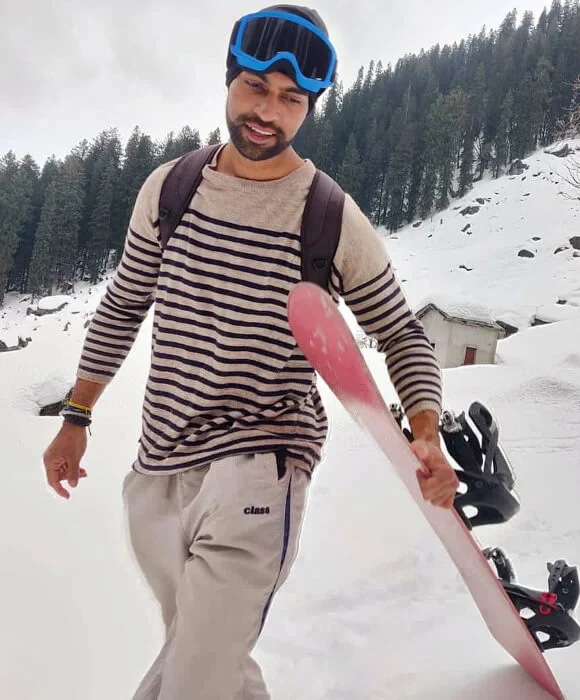
Author: Dev Clayton
Dev — known online as Footloose Dev — is a travel writer and slow-travel advocate who lives in the Himalayas. He writes about journeys that shift the inner compass and the small ways landscapes teach us how to live. Read more at FootlooseDev and explore curated stays at Footloose Camps.
Sabiduri Planning Guide
🧘🏽♀️Where to find spiritual retreats around the World?
The good news is that they can be found in various locations, from secluded natural settings to bustling cities. Find your ideal retreat here!
🚑 Should you buy a travel insurance?
100% YES! — With basic coverage averaging just $50 for your stay, enjoy peace of mind with a plan from Travel SafetyWing, one of the biggest names in travel insurance.
🚗 Is it safe to rent a car around the World?
Yes — Renting a car is one of the best ways to see the country you find yourself in because public transportation cannot reach everywhere! I always rent with Discover Cars, which checks both international companies and local companies, so you get the best rates.
📴 Will my phone work abroad?
Maybe — It depends on your company, so check with your provider. If you don’t have a free service, buy a SIM Card once landed in the country.
🛌🏼 What’s the best way to book my accommodations?
For hotels, Booking is the best site, but for hostels, use Hostel World. If you’re considering Flats, don’t forget to also check Couchsurfing, which is free and you stay with locals.
🛩️ What’s the best site to buy flights?
For finding cheap flights, I recommend Kayak.
🛂 Do I need a visa for these destinations?
Likely Not — U.S., Canadian, and most European Passport holders don’t need a visa for most of destination around the World. BUT check here for more travel requirements. The majority of travelers will receive a 90-Day stamp Tourist Visa upon arrival.