Camino de Santiago Spiritual Journey: Walking in Life


El Camino de Santiago has been a spiritual journey for over 1,000 years.
Since the alleged remains of the Apostle Saint James were discovered, millions of pilgrims have hiked long distances to reach them in Santiago de Compostela, northwestern Spain.
This spiritual pilgrimage still continues to this day, and I hiked it myself last year. I found myself needing some kind of spiritual adventure to heal and move on from an unexpected end to my engagement the year before.
I decided to hike the Camino and spent 33 days walking almost 500 miles through Spain.
Here’s what my unique experience was like taking part in this epic pilgrimage.
Is Camino de Santiago a Spiritual Journey?

The Camino de Santiago is absolutely a spiritual journey for many people. While not everyone hikes for spiritual reasons, many do. Even among those who don’t, everyone seems to find their own piece of what we call “Camino magic.”
To help keep track of and remember the long journey, most pilgrims collect stamps in a Camino pilgrim passport. You can get stamps just about anywhere—from churches, hermitages, bars, and albergues (the hostels where pilgrims sleep).
Those hiking for spiritual reasons will often collect many of their stamps from the various Camino de Santiago religious sites.
Plus, you can get a certificate from the Cathedral of Santiago de Compostela recognizing your sacred journey if you collect a certain amount of stamps over a certain distance.
I love looking back at my pilgrim passport and remembering all the special moments along my own hike.
I found my own “Camino magic” multiple times throughout my time on the Camino Francés, or the French Way, which is the most popular Camino route.
Here are some of the highlights from my own el Camino de Santiago spiritual journey:
Pyrenees Mountains
You can’t help but feel close to God when starting the Camino Francés and crossing over the Pyrenees Mountains. I felt in awe the whole hike, surrounded by lush green mountains, grazing animals, and other hikers.
If you’re wondering what it’s like hiking the Camino Francés, one of my favorite parts of the route is that it allows you to see such a variety of stunning landscapes. Starting in the Pyrenees is definitely special.
Cathedral of Santo Domingo de la Calzada
The Cathedral of Santo Domingo de la Calzada is a beautiful cathedral, but that’s not what makes it stand out. The cathedral is most famous for having live chickens.
They’re there because a pilgrim wrongly sentenced to hanging during the Middle Ages was found resurrected in a miracle involving a rooster and a hen.
Cuatro Cantones Albergue
While not a Camino religious site, my day at Cuatro Cantones Albergue definitely felt spiritual. At this point, I was about a third of the way through my hike and a large group of us decided to stay at this albergue with a pool.
It had rained all day on our hike there, so we thought the pool day we had planned would be ruined. Fortunately, by the time we arrived, the clouds had parted, and we had the best weather.
Relaxing outside in the sun with so many other pilgrims, I felt such a huge amount of gratitude for this physical journey and my many new friends. I connected with another hiker that day who ended up being one of my best friends on the Camino.
Burgos Cathedral

After studying abroad in Spain, I’ve seen so many Spanish cathedrals and churches, but I’ll never forget the Burgos Cathedral.
It’s a UNESCO World Heritage Site with extraordinary Gothic architecture. Inside, it’s full of many elaborate paintings and other works of art.
Ermita de la Virgen de Monasterio
As unassuming as this small single-room hermitage was, it had to be my favorite official religious site on the Camino Francés. I stepped inside to be greeted by two women who very enthusiastically greeted me and everyone else who walked in.
They blessed each of us, giving us a necklace with the Virgen Mary to protect us and keep us strong for the rest of our spiritual journeys on the Camino de Santiago.
I stopped there on a long day hiking 20 miles, and their love and enthusiasm gave me so much energy to continue on.
The Camino definitely had its physical challenge at times. My feet were constantly hurting, swollen, and covered in blisters. But it’s moments like this that helped fill my spirit with the drive to keep going.
I kept that Mary necklace on the rest of the hike and felt so comforted by it.
I’m not Catholic so have never prayed to Mary, but this necklace still made me feel like God and others on the Camino were there for me, holding me up and helping me keep going.
Hostel Parish Santa Maria del Camino
I’ll never forget staying at this albergue run by nuns. They had traveled from a monastery over two hours away to volunteer at this albergue and adjoining church.
The best part was they had us join them in singing a number of songs. We sang one song in Spanish about how everything changes but that those changes are ok and can be beautiful.
Singing there with the nuns and my new friends was another spiritual moment for me on the Camino de Santiago.
I got a bit teary eyed and just felt so happy to be there undergoing this transformative experience after the heartbreaking year before.
Cruz de Ferro

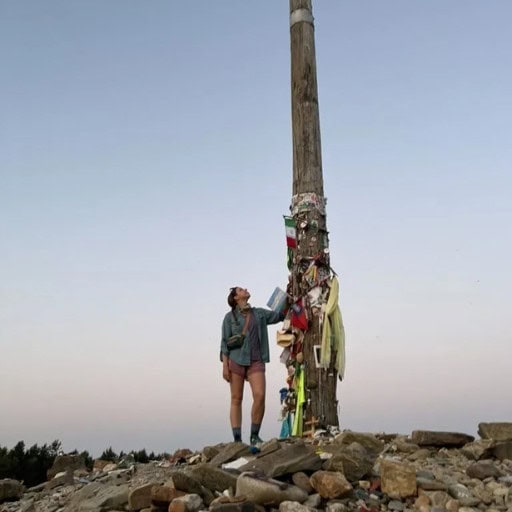
Over 2/3 of the way through the full Camino Francés, pilgrims stop at the iconic Cruz de Ferro, or Iron Cross.
This large iron cross sits atop a pile of rocks carried by pilgrims from their homes. I brought my own rock from home with me that I carried in my pack and left behind at the cross.
There’s something special about this place. You can sense a different kind of energy in the air here, and it’s one of the most spiritual places along the Camino Francés.
The Cruz de Ferro symbolizes the Camino journey, and, in my eyes, it also signifies new beginnings and leaving the heavy things in your normal life behind. In leaving the rock there, you move forward lighter and changed by the sacred journey.
Many people will also use this place to remember lost loved ones or honor someone special in their life, leaving photos, notes, or other mementos.
Terra de Luz
This small hippie vibes kind of stop along the Camino was the perfect place for some snacks and spiritual inspiration to keep going.
Before leaving, I wrote a note of encouragement on a scrap of paper and traded it for one already written and rolled up in a scroll.
I told myself I wouldn’t open the scroll until I reached my final destination. I carried it for days and finally opened it up in Santiago de Compostela and read the words “Don’t let the loves lost keep you from loving fiercely again. LOVE UNAFRAID.”
I couldn’t believe it. This message felt it had been crafted just for me after my broken engagement the year prior. In that moment I absolutely felt the “Camino magic” and that my Camino de Santiago was a spiritual journey.
Cathedral of Santiago de Compostela

No matter which Camino route you hike, every pilgrim’s goal is to reach the Cathedral of Santiago de Compostela where the remains of St. James are allegedly buried.
There’s a certain kind of magic in that moment when you finally arrive at this destination you’ve been thinking about reaching for weeks. I loved sitting in the square outside the cathedral to soak it all in.
Finding Magic Everywhere In Between
There’s so much to see along every Camino alternative route, and everyone has their own unique journey.
Part of what makes el Camino de Santiago so spiritual and special isn’t necessarily the sights along the way, but rather the time to yourself and the people around you.
At least for me, I found it so healing to have so much time alone with my thoughts each day. The Camino provides a refreshing escape from regular life that makes it much easier to reflect, pray, and enjoy living in the present moment.
I met people of all ages and life stages from all over the world. We were all very different, but we were all on this physical journey together, connecting in our search for a little “Camino magic.”
Camino de Santiago Meaning

The Camino de Santiago means many different things to those who complete the trek. While it started as a Catholic pilgrimage, many people today hike for all kinds of reasons.
For most, the Camino de Santiago represents a time to take a step back from regular life and pause and reflect. This time for reflection can be transformative, and the Camino de Santiago might mark the start to a new chapter in normal life for many.
For me, it really reinforced what I had already been thinking—that I was unhappy in my full-time job and the lack of work-life balance in general in the U.S. I didn’t make any immediate moves, but this helped solidify my decision to try to move abroad.
Where Does the Camino de Santiago Start?
There are numerous Camino de Santiago routes with starting points all over Spain, Portugal, France, and beyond.
Here are some of the most popular starting points:
- Saint-Jean-Pied-de-Port, France: Pilgrims hiking the full length of the Camino Frances (the French Way), the most popular route, start here and typically take about a month to complete the long journey.
- Sarria, Spain: This is a popular starting point for those who want to experience the Camino Francés but don’t have time to take a month to hike. This portion of the route takes about one week to complete.
- Porto, Portugal: The Camino Portugués (the Portuguese Way) is the second most popular Camino route, and while you can technically start in Lisbon, most pilgrims start in Porto and spend about two weeks walking.
I personally hiked the full Camino Francés route, starting in St. Jean Pied de Port and ending in Santiago de Compostela.
Things I Wish I Had Known Before Walking the Camino de Santiago?
Before walking the Camino de Santiago, I wish I had tested out my shoes more beforehand. I needed new boots, got fitted for them, and tried them out for a while.
I got to the point where I realized the shoes may not be the best fit, but I ran out of time to get a new pair before leaving.
I thought I could add some shoe inserts or tie them differently and it would help. Unfortunately, it didn’t. My feet started getting blisters on the very first day and were in so much pain.
Thankfully, I brought a pair of hiking sandals and was able to wear those while walking until I got a new pair of shoes when I reached a store selling them.
I ended up buying Hoka Speedgoat trail running/hiking shoes. Tons of other people hiking the Camino were wearing them, and I’ve long been a fan of Hokas for my marathon training.
I got a half size up since my feet were so swollen, and they ended up working out perfectly!
Other than shoes and figuring out what to pack for the Camino, you don’t have to do much research and prep beforehand.
You will want to pick your main route and have a loose walking plan in place, but otherwise you can pretty much figure things out as you go.
What is the Best Month to Walk the Camino de Santiago?
June is the best month to hike the Camino for most routes. Weather is ideal with less rain and more tolerable temperatures, while crowds aren’t as bad as later in the summer.
I recommend avoiding August, as that’s the busiest month on the Camino with many Europeans getting most or all of the month off for vacation. September is similarly crowded as well.
Hiking when it’s too crowded can make it harder to find lodging without booking ahead of time, plus it means more crowded trails.
I personally hiked in June and found it to be just the right amount of people. There were times when I was hiking completely alone, but there were times when I bumped into friends too.
I would avoid hiking the Camino de Santiago in the winter months as many lodgings will be shut down, and there may be dangerous winter weather in the mountains.
Weather can also be challenging in the spring and fall on many Camino routes with more rain and snowy mountains.
FAQs:
Is the Camino de Santiago Dangerous?
The Camino de Santiago is not very dangerous. Hundreds of thousands of people walk the various Camino routes each year without many issues.
The most common crime on the Camino is petty theft, so I just recommend keeping your valuables close.
Is It Safe to Walk the Camino de Santiago Alone?
It is safe to walk the Camino de Santiago alone. I felt extremely safe hiking by myself. Almost everyone I met was also hiking by themselves, and there were plenty of young women going solo like myself.
I recommend staying aware of your surroundings and practicing typical common sense when it comes to safety, but don’t stress about it too much.
Why Is the Camino de Santiago Sacred?
The Camino de Santiago is sacred because it’s been an ancient pilgrimage since the 9th century.
According to UNESCO, the alleged discovery of the remains of Saint James made Santiago de Compostela a “place of Christian pilgrimage comparable in importance to Jerusalem and Rome.”
How to Prepare Spiritually for the Camino de Santiago?
To prepare spiritually for the Camino de Santiago, I recommend taking some time to think about what you want to get out of the hike.
Here are some questions to ask yourself:
– What parts of my life do I want to reflect on or think about while I’m hiking?
– How do I set myself up to stay present in the moment during my hike (e.g., limit cell phone use)?
– How much time do I want to reserve for just myself each day on my hike? As I meet people, how much time do I want to spend hiking with them vs. hiking alone?
– What kinds of holy places help me feel more spiritual (e.g., religious sites, nature, time with friends, etc.)?
– How do I want to prioritize stopping at these kinds of places during my Camino?
– What mantras can I tell myself when the journey gets tough?
– What do I want to learn from myself on this long journey? What do I want to learn from others?
I recommend either bringing a small journal or keeping a digital journal where you can think through these questions and revisit them as you long walk your own Camino.
Don’t worry if you don’t have much time beforehand to think through these questions though. Once you start, you’ll have plenty of time to think through all of this and figure out how to make the most of your spiritual journey on the Camino.
Final Thoughts: Is Camino de Santiago Worth It?
If you’re looking for a spiritual experience, then el Camino de Santiago is absolutely worth it.
It’s an experience that feels like a once in a lifetime kind of adventure, yet at the same time you’ll likely want to do it again.
Author: Mikala Whitaker
Mikala Whitaker is owner and founder of The Unanchored Passenger.
She writes extensively about the Camino de Santiago and focuses her blog on providing information and inspiration to help others travel more.
She provides tips for solo travel, resilience after heartbreak, and unconventional living. When she’s not writing, she’s traveling and enjoying time with her greyhound, Carson.
Sabiduri Planning Guide
🧘🏽♀️Where to find spiritual retreats around the World?
The good news is that they can be found in various locations, from secluded places in nature to bustling cities. Find your ideal retreat here!
🚑 Should you buy a travel insurance?
100% YES! — With basic coverage averaging just $50 for your stay, enjoy peace of mind with a plan from Travel SafetyWing, one of the biggest names in travel insurance.
🚗 Is it safe to rent a car around the World?
Yes — Renting a car is one of the best ways to see the country you find yourself in because public transportation cannot reach everywhere! I always rent with Discover Cars, which checks both international companies and local companies, so you get the best rates.
📴 Will my phone work abroad?
Maybe — It depends on your company, so check with your provider. If you don’t have a free service, buy a SIM Card once landed in the country.
🛌🏼 What’s the best way to book my accommodations?
For hotels, Booking is the best site, but for hostels, use Hostel World. If you’re considering Flats, don’t forget to also check Couchsurfing, which is free and you stay with locals.
🛩️ What’s the best site to buy flights?
For finding cheap flights, I recommend Kayak.
🛂 Do I need a visa for these destinations?
Likely Not — U.S., Canadian, and most European Passport holders don’t need a visa for most of destination around the World. BUT check here for more travel requirements. The majority of travelers will receive a 90-Day stamp upon arrival.