Rila Bulgaria Spiritual: The Most Spiritual Places to Visit in Bulgaria!
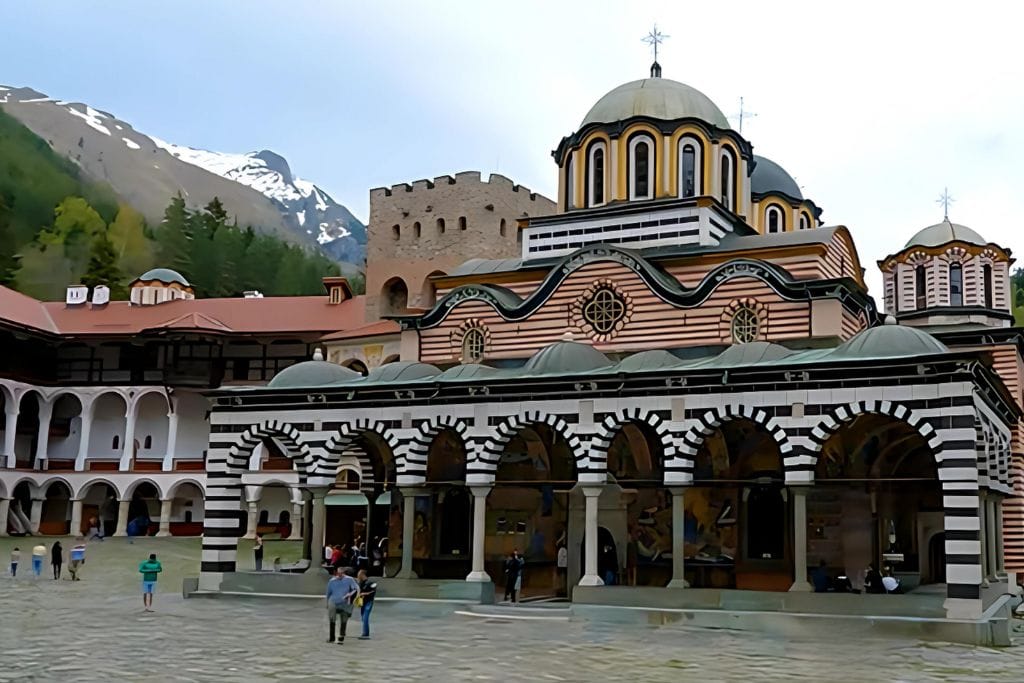

Whenever someone asks me where to go in Bulgaria, on of the first things that comes to mind is the Rila Bulgaria Spiritual Mountains.
Located in the South-West part of the country Rila has long attracted experienced hikers as well as those who would love to just enjoy the views or discover the beauty and the rich history of the spiritual and historic places you can find there.
Personally, as local insiders, it is one of my favorite holy places in Bulgaria. I go there whenever I am in the country and always feel refreshed and full of spiritual energy afterwords.
I grew up in Bulgaria and moved to France when I was 18, but this part of the world still holds an important sacred place in my heart and I am more than happy to share my love for it with you.
Is Rila Bulgaria Spiritual?

Those who are familiar with the Bulgarian culture and traditions are often surprised at how spiritual and superstitious people could sometimes be.
Although many Bulgarians identify as atheists or non-believers, we are still very much spiritual.
Our folklore tells lots of stories about heroes and demons, bad spirits and powerful events that often take place in the mountains.
The Rila Mountains are the highest and the most impressive, thus becoming a source of numerous tales and the sacred place of many spiritual festivals and events.
What is the history of the Rila Mountain?
The region of the Rila Mountains was originally inhabited by Thracian tribes. The Thracians, known for their warrior culture and rich mythology, left behind numerous archaeological artifacts, including tombs and religious sites.
Later on, the Mountains were heavily influenced by the Roman empire, before the slaves settled on the territory.
During the Ottoman rule (14th century – mid-19th century), the Bulgaria’s Rila Mountains provided refuge for rebels and freedom fighters.
The monastic complex, this holy site in particular, became a bastion of Bulgarian culture and Bulgarian Orthodox church faith, helping to preserve national identity.
What is Rila known as?

To me personally, as a local insiders, the first thing that comes to mind about Rila is not the Monastery, but the 7 Rila lakes.
The lakes are famous not just because they are beautiful, but also because they are easily accessible for tourists and hikers. You can take the lift from the seven Rila lakes hut and get up to 2550m sea level.
From there, just enjoy the view and explore the lakes, without much effort. When I visited the lakes for the very first time, I did the full hike by foot. I went from around 1400m to the highest lake which is at 2535m in a few hours.
Needless to say, I was pretty tired.
Probably the most fascinating thing about the lakes, at least for me, are their names and the stories behind them. There is the Kidney, the Eye, the Trefoil, the Fish Lake, the Twin and also the Lower lake.
The latter was just a lack of imagination if you ask me. However, the highest one is not called the Higher Lake. It is called the Tear. Maybe because it looks like a tear, or because the hike is quite steep, and you will probably be crying by the time you get to the top.
Or maybe the name comes from the urban legend about the seven Rila lakes. It tells the story of two giants, a man and a woman, who lived in the mountain long before the humans ever existed.
They lived happily in a beautiful home. Until one day evil forces got envious of their happiness and decided to destroy their peace. They threw rocks and thunders at the mountain.
A huge battle between the giants and the evil forces began and it lasted for centuries. In the end, the male giant unfortunately passed away, but the evil forces left.
Heartbroken, the female giant cried and cried and her tears healed the mountain, creating beautiful lakes where their home once was.
Speaking of legends, there is no other place in Bulgaria that tells as many legends as the Rila Monastery.
It is a symbol of the Bulgarian Christian Orthodox faith. Founded in the 10th century by the hermit St. John of Rila (Saint Ivan Rilski or Saint Ivan of Rila), the old monastery became a cultural heritage center of spiritual heritage and cultural significance life.

It played an important role during the Ottoman period, preserving Bulgarian culture and Bulgarian Orthodox Christianity. Today the Monastery is the final resting places and the home of the relics of St John, who was believed to be a pilgrim and healer.
The years of his life in the Mountains and helped many people. Every year, thousands go to the monastery church to be blessed by his spirit. The biggest monastery is now a UNESCO World Heritage Site.
But of course Rila is also known for its ski resorts (notably Borovets), Mount Musala (the highest peak of the Balkans), the Mineral Springs of Sapareva Banya the Stob architectural monuments and so many more.
You can easily spend weeks exploring the mountain and you will still only see a fraction of what it has to offer.
Personal Experience in Rila Mountains
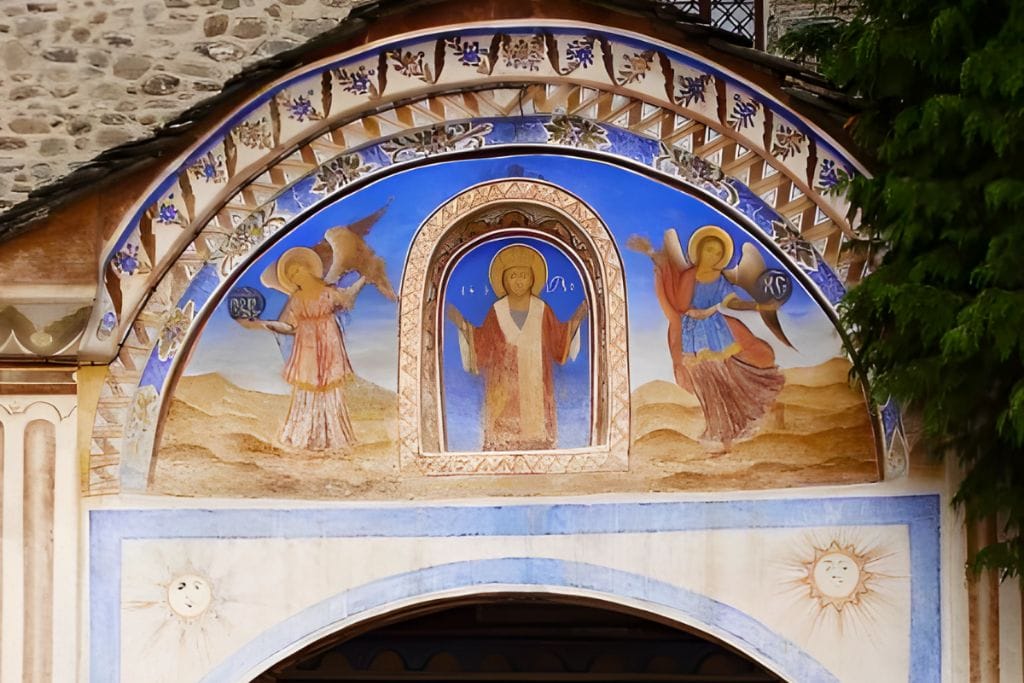
I grew up in Bulgaria and from my early childhood till my late teens, at least once every two years someone from my school organized culture trip team to the Rila Monastery.
So, I got the chance to learn quite a few things about this beautiful place.
However, I am ashamed to say that the first time I went on a hike to the Rila Mountains was way into my twenties, after I’ve already built a life for myself in France.
A few of my French friends came with me to Bulgaria and I wanted to show off my country. I took them to the 7 lakes hike and even 10 years later it is still one of the most beautiful hikes I’ve ever done.
In school we learned quite a lot of legends and facts about the Mountains and the Monastery church, so every time I visit, I just look for signs and good omens.
Maybe it is strange, but as I’ve mentioned before, we Bulgarians are superstitious, and I like it that way.
Rila Bulgaria Spiritual Facts
Bulgaria was created in the 7th century and throughout its history, many wars were won or lost, but the Rila Mountains were almost always part of the country.
Thus, a lot of cultural traditions and lots of folklore have started here, making it one of the most spiritual places in the country.
It is also one of the most beloved and cherished regions and lots of Bulgarians vacation here, to enjoy the sun or the snow, the natural beauty, and the monasteries.
Rila Map
The Rila Mountains are located in southwestern Bulgaria. It is part of the larger Rila-Rhodope Massif and is the highest mountain range in the Balkan region. It is situated approximately 70 kilometers south of Sofia, the capital of the country.
It is accessible by car from major cities and towns, making them a captivating destination for both local and international visitors.
How to Get to Rila Mountains?
There is no point in lying. If you don’t have a car in Bulgaria, visiting the Rila Mountains might be complicated.
Depending on where you plan on going, the access to the mountain by public transportation might be hard or harder.
There are buses going from capital Sofia or Plovdiv to some bigger cities such as Dupnica or Rila. From there you can take another bus that will bring you closer to your destination.
But if you choose to use the public transport, be patient. The buses are not always reliable, but you will surely get a good story out of the lifetime experiences.
Rila Mountains Weather
One of the many reasons I love my home country is that it has all the well-defined four seasons. It has a very hot summer, a cold and snowy winter, sunny spring, and windy autumn.
It has the Mountains for skiing in winter and the Black Sea for chilling at the beach during the summer. So, no matter when you plan on visiting Bulgaria, you can always find what to do.
However, if your goal is to go hiking Rila Mountain, I would recommend late spring or early summer. It is warm enough to enjoy yourself but not that crowded. The same applies if you would like to visit the Rila Monastery.
But I would recommend checking the religious scenes and public holidays in Bulgaria to be sure that the Monastery is open.
If you are looking forward to doing some skiing in Borovets, chances are you will be happy doing that from December till March.
FAQs
What Is the Highest Point in Rila?
Rila Monastery How to Get There?
The easiest way to go to the Bulgarian church is by car. From the capital Sofia, it takes about 1.5h-2 h, depending on where you begin your journey.
If you cannot rent a car, you can also go by bus, but it might be more complicated.
The fastest way from Sofia will be to can take the public bus to Dupnica and then go from Dupnica to the Monastery (and leave your cat at the parking lot).
You can also join an organized tour, they are quite popular.
Why Is It Called the Balkan Mountains?
As many words in this part of the world, the term « Balkans » comes from the Turkish word « Balkan » which means « a chain of wooded Mountains » or just « a chain of Mountains ».
It was used by the Ottomans to refer to the regions of southeastern Europe. Over time, the term became the official name of the Balkan Peninsula.
In Bulgaria, there is another mountain called « The Balkan » or « Stara planina » (old mountain). It is located in the middle of the country and goes from Sofia almost up to the Black sea, thus separating the country in two.
How Many Monks Live at Rila Monastery?
It is not easy to answer this question, as there is no official data.
As of the most recent reports, approximately 60 monks live in the Monastery.
But the number changes regularly, depending on novices joining or monks leaving or other unique opportunity in the community.
Is the Rila Monastery Free?
The entrance to the Bulgarian church is free.
If you want to visit the museum which is part ot the territory you have to pay a small fee. As of 2024 the fee is 8 BGN (approximately 4 euros or 6 dollars).
Wrap-Up: Is Rila Mountains Worth Visiting?
I may be bios as it is my home country, but I do believe the Rila Mountains are worth visiting.
Weather it is for a hike or for a spiritual pilgrimage, for skiing or for bird watching, the mountain with its parks, its monasteries and its history should be a must on every future travels traveler’s check list.

Author: Radina
Radina is from Bulgaria but is currently based in France.
She’s been traveling pretty much her whole life, and as of 2023, she is working on a travel blog in French, Radiscovery Travel, mainly about the Balkans and Eastern Europe.
Sabiduri Planning Guide
🧘🏽♀️Where to find spiritual retreats around the World?
The good news is that they can be found in various locations, from secluded places in nature to bustling cities. Find your ideal retreat here!
🚑 Should you buy a travel insurance?
100% YES! — With basic coverage averaging just $50 for your stay, enjoy peace of mind with a plan from Travel SafetyWing, one of the biggest names in travel insurance.
🚗 Is it safe to rent a car around the World?
Yes — Renting a car is one of the best ways to see the country you find yourself in because public transportation cannot reach everywhere! I always rent with Discover Cars, which checks both international companies and local companies, so you get the best rates.
📴 Will my phone work abroad?
Maybe — It depends on your company, so check with your provider. If you don’t have a free service, buy a SIM Card once landed in the country.
🛌🏼 What’s the best way to book my accommodations?
For hotels, Booking is the best site, but for hostels, use Hostel World. If you’re considering Flats, don’t forget to also check Couchsurfing, which is free and you stay with locals.
🛩️ What’s the best site to buy flights?
For finding cheap flights, I recommend Kayak.
🛂 Do I need a visa for these destinations?
Likely Not — U.S., Canadian, and most European Passport holders don’t need a visa for most of destination around the World. BUT check here for more travel requirements. The majority of travelers will receive a 90-Day stamp Tourist Visa upon arrival.