Monasteries of Ladakh: Experiencing Buddhism in the High Mountains

As a traveler, I like to visit religious places for that spiritual and socio-cultural experience.
These religious places are generally linked to and embedded in the cultural aspects of the local communities. Among all the religious shrines, perhaps Buddhist monasteries have captured my imagination the most.
I have visited a number of Buddhist monasteries in different states of India, from the north-eastern region to Himachal Pradesh and Uttarakhand. I am quite fascinated by both the life of Buddha and the aesthetics of these monasteries.
While visiting Leh- Ladakh and Spiti Valley, I explored most of the ancient and iconic monasteries and learned the stories behind them as well.
I first visited Ladakh in 2024 and Spiti in 2025. Buddhism is deeply integrated with the lives of the people of Ladakh. Before Buddhism, the people of Ladakh followed the Bon religion. Buddhism in Ladakh shares many similarities with Tibetan Buddhism.
It is common there to see people praying with prayer wheels, circumambulating stupas or mani walls (made of stones), and offering butter lamps.
These actions have deep meanings, which I learned during my various visits to the monasteries. These practices are generally meant to express devotion and cultivate compassion and wisdom.

The ancient monasteries in Ladakh helped me realize and experience spirituality, which ultimately gives you the wisdom to live life in this world.
Buddhism gradually teaches you to liberate yourself from suffering and cultivate unconditional compassion. Eventually, it transforms you, nurturing a beautiful and strong heart filled with kindness and empathy for difficulties.
History of Buddhism in Ladakh
Buddhism first entered Ladakh from the Kashmir side, not from Tibet, perhaps in the first and second centuries AD. Rock engravings from the pre-Tibetan period of Buddhism have been found at various places in the Kargil district.
According to Janet Rizvi in Ladakh: Crossroads of High Asia, at the beginning of the tenth century, Buddhism might have been flourishing in western Ladakh and may or may not have penetrated the upper Indus Valley and areas to the east and north.
The decline of Buddhism in North India might have led Indian Buddhist monks to Ladakh, and they also brought their own traditions of iconography and worship.
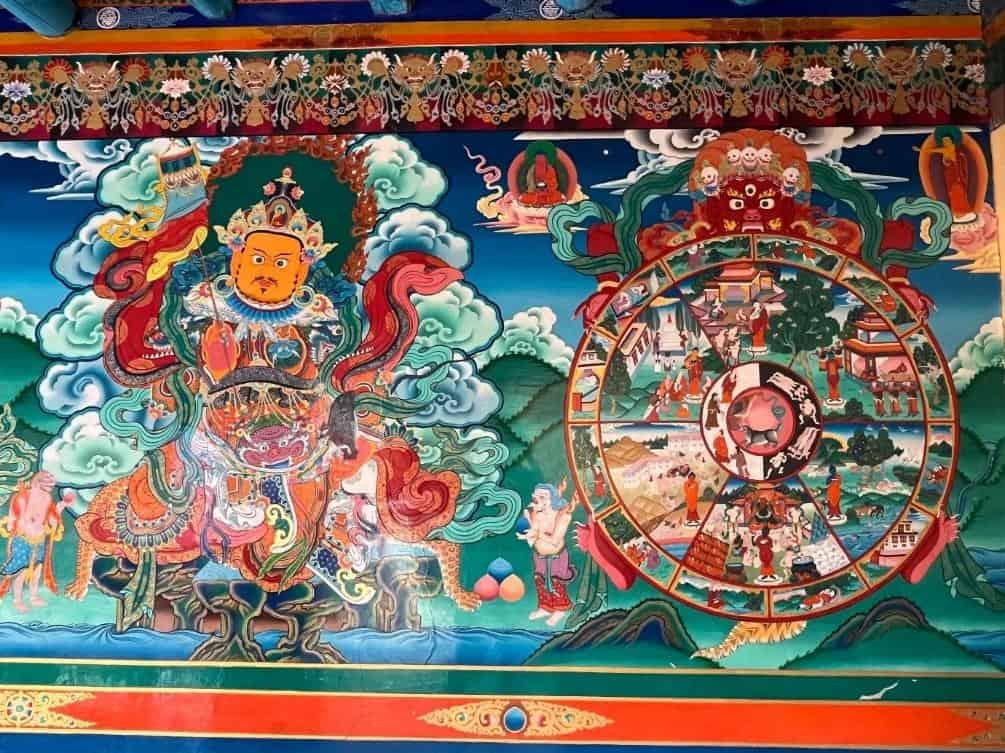
Buddhism was accepted as the state religion of Tibet only during the reign of Ston-tsan-gam-po in the seventh century. Friction between the two religions—Buddhism and the older Bon religion—led to the dynasty’s collapse.
The first spread of Buddhism in Tibet proper, led by the Indian apostle Padmasambhava, came to an end with the events of AD 842.
The second spread of Buddhism began about two centuries after the conquests of the kings of Nyima-Gon’s dynasty (Nyima–Gon, the founder of the Ladakh dynasty and a legitimate representative of the ancient Tibetan royal house).
Considering the earlier political turmoil, the kings avoided Tibet and looked to north-west India, particularly Kashmir, to establish Buddhism. The most active ruler in spreading Buddhism was King Yesh-es-od, a grandson of Nyima-Gon.
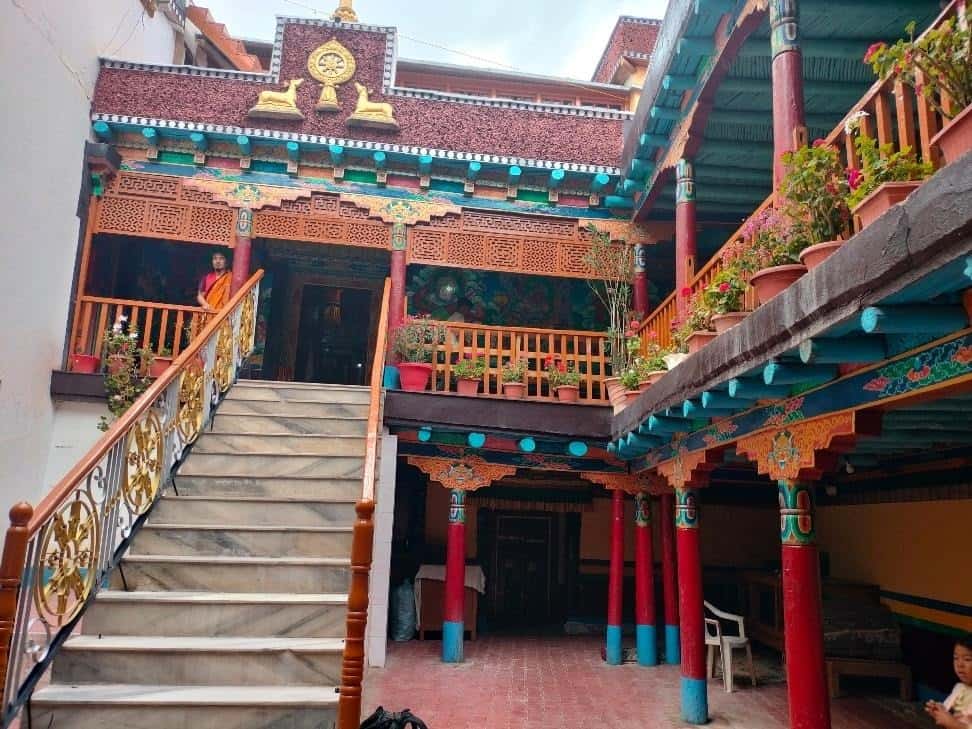
The king, along with two scholars and missionaries—Rin-chen-zang-po and Atisa—worked to spread Buddhism in Ladakh.
The king sent Rin-chen-zang-po to Kashmir and other Buddhist centers in North India to study and absorb the traditions of Indian Buddhism and then return to western Tibet to propagate them. He was the single most influential agent of the second spread of Buddhism.
Tradition connects his name to a number of monasteries in Kinnaur, Spiti, Kashmir, and Ladakh, of which Tabo in Spiti Valley and Alchi in the Indus Valley are particularly impressive and popular.
Whereas Atisa played a role in introducing the Vajrayana form of Mahayana Buddhism, including forms of Tantra, into Tibet, including Ladakh.
It shows how Buddhism has deeply shaped the life and culture of the Ladakh people over the centuries.
Though today Buddhists make up about 40% of the region, you will still find religious structures such as chortens (stupas), mani walls carved with sacred mantras, and prayer flags and prayer wheels.
Rituals like walking clockwise around chortens and spinning prayer wheels symbolize harmony with the cosmic order, the law of existence, and the earning of spiritual merit.
Monasteries, or gompas, are central to the spiritual and social life of the Ladakhi people. These religious places are led by lamas, who are often believed to be reincarnations of holy beings.
Lamas guide people through various teachings and rituals and also play important roles in festivals such as Losar and in ceremonies for births, marriages, and deaths.
My Experience at Monasteries in Ladakh
I visited Ladakh in the spring of 2024 with Suvendu as company. During our stay in Ladakh, we visited several monasteries, including Alchi, Likir, Spituk, Thiksey, Diskit, Hemis, Stakna, Shey, and Phayang.
Though all monasteries in Ladakh are special, I would love to share my experiences of three in particular—Spituk, Stakna, and Alchi.
To know about more monasteries, check out: Best Monasteries in Leh- Ladakh
1. Spituk Monastery
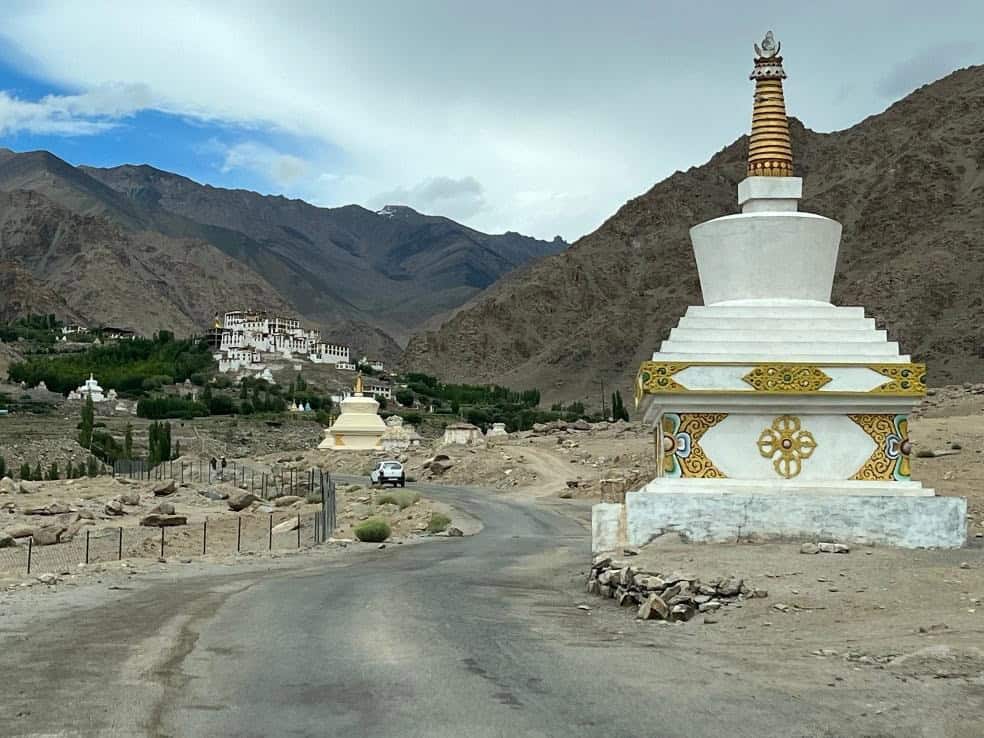
This monastery is located very near to Leh, about 6 km to the southwest on the Leh-Srinagar road. My spiritual journey at the monastery started from the very first step upward.
At every few steps, I found sets of prayer wheels. Rolling those prayer wheels as I climbed the steps filled me with a sense of spirituality. After climbing some steps, I came to a large prayer wheel, which I turned while enjoying the view of the Indus River.
P.S. The view of the Indus River added depth to the sense of divinity.
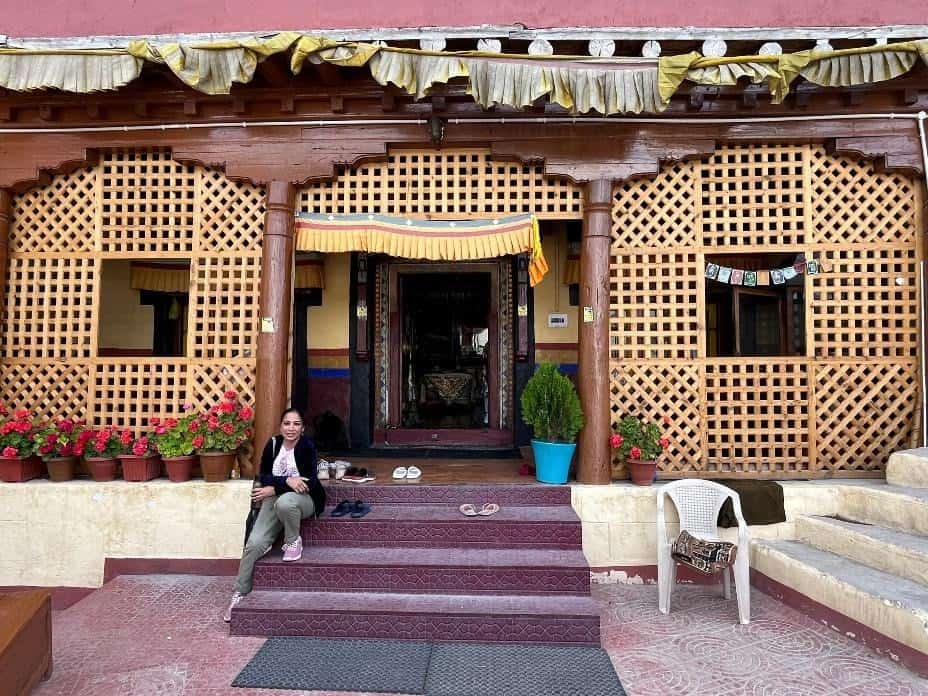
As I reached the main hall, the large Buddha statue with colorful interiors left me astonished.
I took some time there for meditation, slowly gazing at the paintings and statues of different figures—Amitayus, the Buddha of Boundless Life; Lord Buddha (Sakyamuni); Mahakal; Goddess Kali; Goddess Tara; and Tsong-Kha-Pa, the Tibetan lama and founder of the Dge-lugs-pa tradition.
I also liked observing the large wax bowl placed in front of the great Buddha statue. The prayer and quiet time spent in front of the Buddha and the lamp helped me focus and meditate. It felt like taking one more step towards wisdom and fulfillment.
2. Stakna Monastery
The monastery is located about 25 kilometers from Leh. I especially liked the architecture of the monastery. It is constructed on an isolated rock about sixty meters high, rising from the almost flat land of the Indus Valley. Even from a distance, it makes its presence felt.
The walk up to the main assembly hall, with prayer wheels to spin along the way, was quite blissful. After reaching the assembly hall, the stupendous views of the Indus River, both upstream and downstream, felt almost otherworldly.
I then entered the main hall and heard the chanting of the lamas; my inner voice whispered, “What a blessed day”.
With full devotion, I participated in the ritual. I sat in a corner with my eyes closed, letting my mind follow the rhythm of the chanting. The time spent there made my soul feel very calm. The view from the roof and participating in the ritual together made the experience truly unmatched.
3. Alchi Monastery
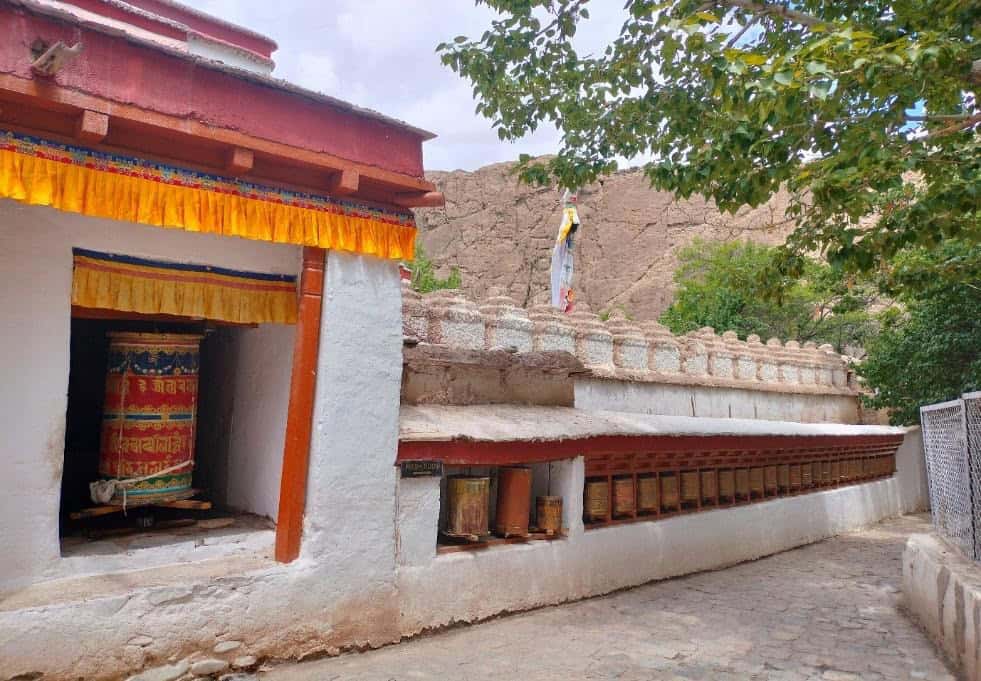
Located 70 kilometers north-west of Leh, Alchi Monastery is the principal surviving monument of the second spread of Buddhism in Ladakh.
As I entered the village, I saw many old Buddhist symbols, such as chortens, prayer wheels, the walking stick of Rinchen Zangpo, and prayer flags. The ambiance of the village was quite tranquil and spiritually elevated.
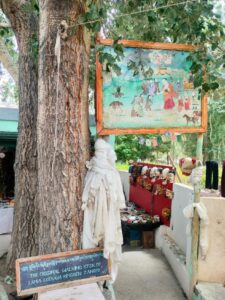
Walking stick of Lama Lotsava Rinchen Zangpo at Alchi
There were three separate temples on the campus. The campus itself was very peaceful. It is purely in the style of Indian Buddhist architecture, not Tibetan Buddhism.
The murals preserved in the monastery, from the eleventh and twelfth centuries, tell the stories of a pre-existing Buddhist culture that was later obliterated by the transition to Hinduism, followed by Muslim invasions in Kashmir and Ladakh.
I visited all three temples one by one and spent some peaceful time there. The old construction with preserved murals in their original form gave me a chance to immerse myself in spirituality. The old chortens and prayer wheels in the village facilitate meditation during parikrama.
It was one of the best experiences for me, helping me realize a sense of spiritual awakening.
In a Nutshell…
Visiting monasteries in Leh- Ladakh was as much about spiritual experience as a lesson in history, heritage, and architecture. A bit of curiousness made me realize how the history of the entire region from Tibet to Kashmir and Himachal shaped up over centuries.
The cultural inflows and outflows shaping up the past, present and future of the communities are clearly evident.
Further, a deeper look also shed light on how the architecture of the monasteries changed in a subtle way over the years and also from region to region.
I would love to go back to Ladakh and explore more monasteries, especially those in the hinterlands, away from the typical tourist circuits.

Author: Parina Einjen
In a career spanning more than 20 years, Parina has worked with some of the best NGOs, network organizations, and government agencies.
She has been working in agriculture, natural resource management, capacity building (training), and holistic rural development. Apart from her mainstream profession, she is a traveler at heart.
She loves exploring historic ruins, heritage monuments, and culturally rich destinations and documenting her experiences. She and her husband write a travel blog- Stamped Moments.
Sabiduri Planning Guide
🧘🏽♀️Where to find spiritual retreats around the World?
The good news is that they can be found in various locations, from secluded natural settings to bustling cities. Find your ideal retreat here!
🚑 Should you buy travel insurance?
100% YES! — With basic coverage averaging just $50 for your stay, enjoy peace of mind with a plan from Travel SafetyWing, one of the biggest names in travel insurance.
🚗 Is it safe to rent a car around the World?
Yes — Renting a car is one of the best ways to see the country you find yourself in because public transportation cannot reach everywhere! I always rent with Discover Cars, which checks both international companies and local companies, so you get the best rates.
📴 Will my phone work abroad?
Maybe—it depends on your company, so check with your provider. If you don’t have a free service, buy a SIM Card once you land in the country.
🛌🏼 What’s the best way to book my accommodations?
For hotels, Booking is the best site, but for hostels, use Hostel World. If you’re considering Flats, don’t forget to also check Couchsurfing, which is free and you stay with locals.
🛩️ What’s the best site to buy flights?
For finding cheap flights, I recommend Kayak.
🛂 Do I need a visa for these destinations?
Likely Not — U.S., Canadian, and most European Passport holders don’t need a visa for most destinations around the World. BUT check here for more travel requirements. The majority of travelers will receive a 90-Day stamp Tourist Visa upon arrival.