Elephant Nature Park: A Healing Place for Elephants and Humans

When most people think of Thailand, they imagine white beaches, spicy Pad Thai, tuk-tuks honking and weaving through chaotic streets, palm trees swaying in the heat, and smiling faces welcoming visitors from all over the World. For me, the picture looks slightly different.
When I think of Thailand, my mind wanders far away from the hustle and bustle of tourist magnets like Bangkok or Phuket, into the country’s mountainous North.
Green hills, misty mornings, rivers winding through valleys, and somewhere in the middle of it all: a place that restored my faith in humanity, taught me lessons in resilience and acceptance, and gave me a sense of inner peace as I’ve rarely felt before.
Tucked away about an hour outside Chiang Mai lies Elephant Nature Park.
At first glance, the sanctuary almost sounds like something out of a fairytale: a vast green valley where elephants roam freely, surrounded by forests and rivers, cared for by people who dedicate their lives to their well-being.
But the deeper you look, the clearer it becomes that this place exists because of a much darker reality.
Elephant Nature Park is home to over 200 rescued elephants, along with hundreds of other animals, including dogs, cats, buffalo, cows, and horses. Most of them share one thing in common: they were once victims of exploitation, neglect, or abuse.
Before arriving here, most of the elephants lived in a reality far removed from the rose-colored image many visitors hold when booking “elephant experiences” in Thailand.
Some animals spent decades carrying tourists on their backs in trekking camps. Others worked in logging, dragging massive trees through forests, before the industry was officially banned in Thailand in 1989. A few were forced to perform in shows, painting pictures, playing football, or standing on small stools to entertain crowds and make tourists laugh.
Behind those performances lies a dark secret: elephants must first be broken to obey humans.
To make them submissive, young elephants are often separated from their mothers and subjected to a brutal training process designed to make them fear humans enough to follow commands. Chains, physical punishment, and isolation are sadly common methods.
By the time many elephants arrive at Elephant Nature Park, they carry not only physical scars, but emotional trauma as well. And yet, despite everything they have endured, the sanctuary offers them something many have never experienced before: freedom, acceptance, and a life in the herd.
Here, the elephants are not chained, not forced to interact with visitors, and not expected to perform.

Instead, they live in small social groups, roam large areas of land, and spend their days doing what elephants naturally do: eating, bathing in rivers, playing in mud, and communicating with each other. For many of them, it is the first time in their lives that they can be elephants.
Visitors must follow a strict hands-off policy, meaning the elephants decide whether they want to approach humans. This simple rule makes it clear that the park exists for the elephants, not for human entertainment. They are not seen as a product or attraction, but as individuals worthy of a life in peace and safety.
And as I would soon discover, Elephant Nature Park is not just a place where elephants begin to heal. It’s a place where humans do, too.
Volunteering at Elephant Nature Park
During my time in Thailand, I had the incredible opportunity to spend a week volunteering at Elephant Nature Park. The volunteer program allows visitors to stay directly on the sanctuary grounds from Monday to Sunday.
Transport is arranged from Chiang Mai, and after about an hour’s drive through the mountains, the van turns onto a small road that leads into the valley where the sanctuary lies.
Volunteering at Elephant Nature Park doesn’t mean spending every minute with elephants. In fact, the sanctuary makes it very clear that the program’s purpose is to support the staff’s daily work, not to take selfies with the elephants for Instagram.
The days begin with breakfast in the communal dining area, then head out to help with various tasks around the sanctuary. Work is usually split between a few hours in the morning and a few hours in the afternoon.
The tasks vary depending on what is needed that day. Sometimes, volunteers gather around enormous piles of corn, peeling hundreds of ears that will later be distributed to the elephants.
Other days are spent cutting watermelons, sorting bananas, or preparing special rice balls for older elephants that have difficulty chewing. And then there’s the task that unexpectedly became my favorite: collecting elephant poop. (Yes, really.

Armed with buckets and shovels, we would drive out onto the grounds to collect the massive piles of dung left behind by the elephants. It might sound strange that this could be an enjoyable experience, but it meant spending time directly in the areas where the elephants roam.
And often, they would wander over, curious about what we were doing. More than once, a curious elephant approached the truck, stretching its trunk toward the growing pile of dung to playfully inspect our work.
It was both heartwarming and entertaining to see them so playful, and seemingly just as intrigued by our presence as we were by theirs.
Other tasks included gathering wood along the riverside, helping unload deliveries of fruits and vegetables, or preparing enrichment food for the elephants. The work itself wasn’t particularly difficult or skill-based, but it was meaningful. The sanctuary cares for hundreds of animals every day, and we quickly learned that every extra pair of hands is helpful.
Elephants, Dogs, and Life Lessons
Whenever we had free time, I often found myself drawn toward the dog area.
Volunteers are allowed to take some of the dogs on walks, especially those using wheelchairs, who benefit from the extra exercise and stimulation. It quickly became one of my favorite parts of the day.

Walking a joyful little dog through the sanctuary while observing elephants standing in the distance felt almost surreal, and every day I pinched myself, smiling widely. How had this become my life?
At first, seeing the disabled dogs had been difficult. But it quickly became clear that their disability didn’t stop them from being happy little dogs who, like any other dog, loved going for walks.
Once outside and strapped into their wheelchairs, they were just as fast and curious as their peers, not spending a single second feeling sorry for themselves, but instead excited about all the wonderful things to discover during their walk.
For me, it was a dream come true: walking dogs while seeing elephants in the distance. But it was also a beautiful lesson in resilience and in enjoying life to the fullest despite hardship.
Learning the Elephants’ Stories

During our stay, the sanctuary staff also shared the stories of many of the elephants living there.
Nearly every one of them had endured hardship before arriving at the park. Some were rescued after decades in the logging industry, their bodies worn down from years of heavy labor. Others had been blinded or injured while working in tourist camps.
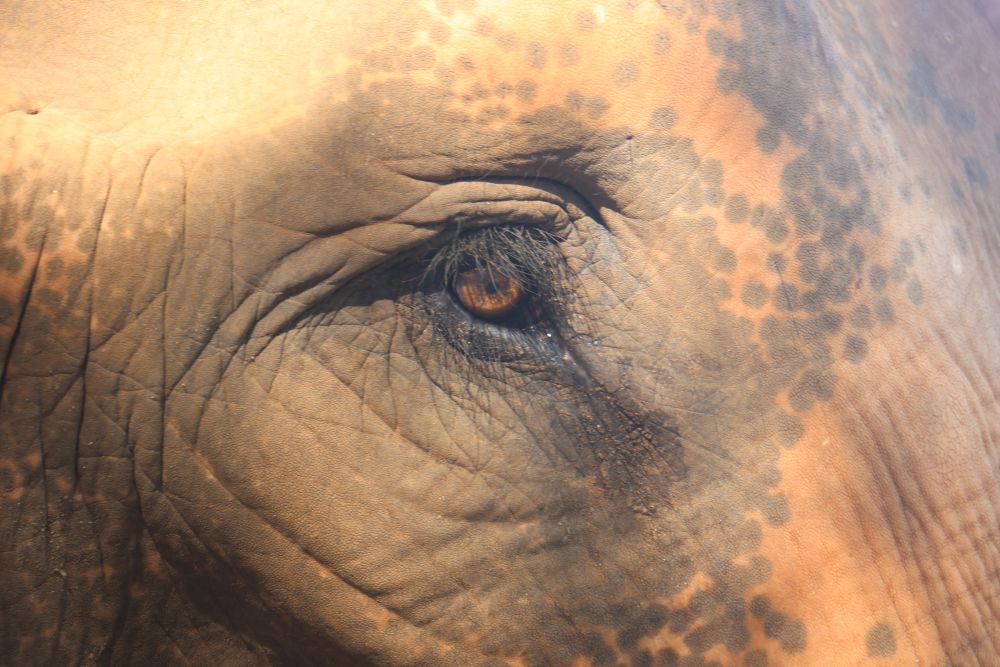
For example, Jokia, who arrived at the park at 39 after spending her entire life working in the logging industry. After suffering a miscarriage, she fell into depression and refused to continue working. Her owner responded by injuring her with a slingshot, blinding her in both eyes.
She arrived at Elephant Nature Park in 1999, where she formed deep bonds with other elephants who now guide and protect her.
Hearing these stories is heartbreaking, and it was very hard not to feel anger when confronted with the suffering humans have caused. However, life at the sanctuary taught me not to focus on bitterness. Instead, it showed me the power of healing and that everyone deserves a second chance at life.
And sometimes, we had the honor of witnessing these moments of healing. On rainy days, for example, some of the younger (and not so young) elephants would climb the small muddy hills and slide down them like children on a playground.
Then, covered in mud, they would run back up the hill to do it all over again. Their joy in being alive in those moments was unmistakable.
My Favorite Moments at the Sanctuary

Despite all the incredible experiences throughout the week, my favorite moments were always the quietest ones.
Every morning, I would wake up before most of the other volunteers. The sanctuary was almost completely silent at that hour, except for some of the dogs running around. Every morning, I would grab a cup of coffee and walk to the observation area overlooking the valley.
From there, you could see large parts of the sanctuary stretching into the distance. Slowly, as the sun rose higher, the first elephants would appear, walking toward their breakfast prepared by their mahouts.
And so we would sit there together… myself with my coffee, the elephants with their enormous piles of grass and fruit.
Around them, groups of rescued buffalo grazed peacefully. All of them had been saved from slaughterhouses and now lived out their lives here. Those mornings were among the most peaceful moments I have ever experienced.
Another moment that stayed deeply engraved in my memory was watching the herd return every afternoon through the river. At the end of the day, when the heat softened and shadows stretched across the valley, the elephants would slowly make their way back across the water.
They always came back in a line, but while some walked calmly through the current, others splashed playfully, spraying water across their backs with their trunks.
What fascinated me most was the way they communicated: elephants use infrasound, extremely low-frequency sounds that travel through the ground and air but are completely inaudible to the human ear.
Standing there, watching the herd move together so effortlessly, it was impossible not to feel fascinated, and deeply humbled, by these silent conversations happening all around us.
Watching them cross the river day after day became a small ritual with which I would end the day.
A Sanctuary for All Animals
One of the aspects that made Elephant Nature Park particularly special to me was its philosophy toward animals and life.
The sanctuary not only protects elephants. It also provides refuge for hundreds of other animals who have suffered abuse, neglect, or abandonment.

Buffalo and cows rescued from slaughterhouses graze in the same fields as the elephants: one life valued just as much as the other. And importantly for me, the entire sanctuary serves 100% vegan (and delicious!) food.
As a vegan for many years, I found this detail made me feel more at peace at Elephant Nature Park than I had expected. Too often, animal sanctuaries protect one species while serving the meat of another.
Here, the approach showed me an honest commitment to compassion, in which every life is seen as valuable and worthy of respect, regardless of species.
Encounters with animals have always been among the most meaningful moments of my travels. From trekking through the rainforest of Sumatra in search of wild orangutans to visiting ethical sanctuaries like Elephant Nature Park, these experiences often reveal both the beauty of wildlife and the responsibility we have toward protecting it.
FAQ: Visiting Elephant Nature Park
How Do You Get to Elephant Nature Park?
Elephant Nature Park is located about 60 km outside Chiang Mai in Northern Thailand.
Most visitors reach the sanctuary via park-arranged transfers. When you book a day visit, overnight stay, or volunteer program, transportation from Chiang Mai is typically included.
Where Should You Stay?
If you want the most immersive experience, staying inside the sanctuary is highly recommended. Overnight guests and volunteers sleep in a comfortable accommodation located directly on the park grounds.
Alternatively, you can stay in Chiang Mai and visit the sanctuary as part of a day trip.
What Is The Best Time To Visit?
The best time to visit Northern Thailand is generally between November and February, when temperatures are cooler, and the air is clearer. However, Elephant Nature Park is open year-round.
What Should You Bring?
If you plan to visit or volunteer, it is helpful to bring:
– Comfortable clothes you don’t mind getting dirty
– Closed shoes or hiking sandals
– Sunscreen and a hat
– Insect repellent
– A reusable water bottle
– A camera or binoculars for observing elephants from a distance
Are There Places To Eat at the Sanctuary?
Yes, and the food is amazing! All meals served at Elephant Nature Park are 100% plant-based.
Large buffet-style meals are prepared daily for visitors and volunteers, featuring Thai dishes, fresh vegetables, rice, curries, salads, and fruit.
How Do You Move Around the Sanctuary?
Most movement around the sanctuary happens on foot. Paths connect the main areas, observation points, and volunteer facilities.
Staff and guides accompany visitors during scheduled activities to ensure the safety and well-being of both humans and animals.
Practical Travel Tips
• Book your visit well in advance, especially if you want to volunteer.
• Bring a good camera or zoom lens, since elephants are observed from a respectful distance.
• Take time to listen to the guides and learn about the elephants’ stories: it adds much deeper meaning to the visit.
Leaving Elephant Nature Park

By the end of the week, I felt a sense of peace and calm that was rather unfamiliar to me in my everyday life.
During those days at the sanctuary, I had learned to slow down. To observe and to sit with someone else’s struggle, no matter if it was a blind elephant carefully feeling its way forward or a dog unable to walk, dragging its hind legs across the ground with a wagging tail to greet me.
I learned to be present simply and to accept that some things take time to heal, and that some injuries, external or internal, may never fully disappear. And yet, life can still be beautiful.
Elephant Nature Park may have been created to heal animals. But in the process, it also heals the humans who come to visit.

Author: Lynn Schroeder
Lynn is the creator of VanderlustJourney, a travel blog focused on vegan travel, sustainable adventures, and outdoor experiences around the world.
Together with her partner Daniel, she shares stories, photography, and practical travel guides that show how exploring the world can go hand in hand with compassion for animals and the planet.
Elephants have always held a special place in her heart, which made her experience at Elephant Nature Park especially meaningful.
Sabiduri Planning Guide
🧘🏽♀️Where to find spiritual retreats around the World?
The good news is that they can be found in various locations, from secluded natural settings to bustling cities. Find your ideal retreat here!
🚑 Should you buy travel insurance?
100% YES! — With basic coverage averaging just $50 for your stay, enjoy peace of mind with a plan from Travel SafetyWing, one of the biggest names in travel insurance.
🚗 Is it safe to rent a car around the World?
Yes — Renting a car is one of the best ways to see the country you find yourself in because public transportation cannot reach everywhere! I always rent with Discover Cars, which checks both international companies and local companies, so you get the best rates.
📴 Will my phone work abroad?
Maybe—it depends on your company, so check with your provider. If you don’t have a free service, buy a SIM Card once you land in the country.
🛌🏼 What’s the best way to book my accommodations?
For hotels, Booking is the best site, but for hostels, use Hostel World. If you’re considering Flats, don’t forget to also check Couchsurfing, which is free and you stay with locals.
🛩️ What’s the best site to buy flights?
For finding cheap flights, I recommend Kayak.
🛂 Do I need a visa for these destinations?
Likely Not — U.S., Canadian, and most European Passport holders don’t need a visa for most destinations around the World. BUT check here for more travel requirements. The majority of travelers will receive a 90-Day stamp Tourist Visa upon arrival.