Oracle vs Tarot: Important Differences Explained

You’re standing there, holding two decks… One says tarot, and the other says oracle. And you’re thinking: What’s the actual difference? Which one should I start with? Is one more accurate?
Let me answer you clearly. Tarot is a structured symbolic system that maps the full human experience, and Oracle cards are flexible, intuitive message tools designed around a specific theme.
I’ve created decks and worked with people who were intimidated by tarot and others who got bored with oracle cards after two weeks. I’m not here to romanticize either; I’m here to help you choose the tool that fits you.
By the end, you’ll know exactly where you stand in the whole oracle vs tarot debate… and WHY.
What Are Tarot Cards?
Tarot cards follow a fixed structure. ALWAYS.
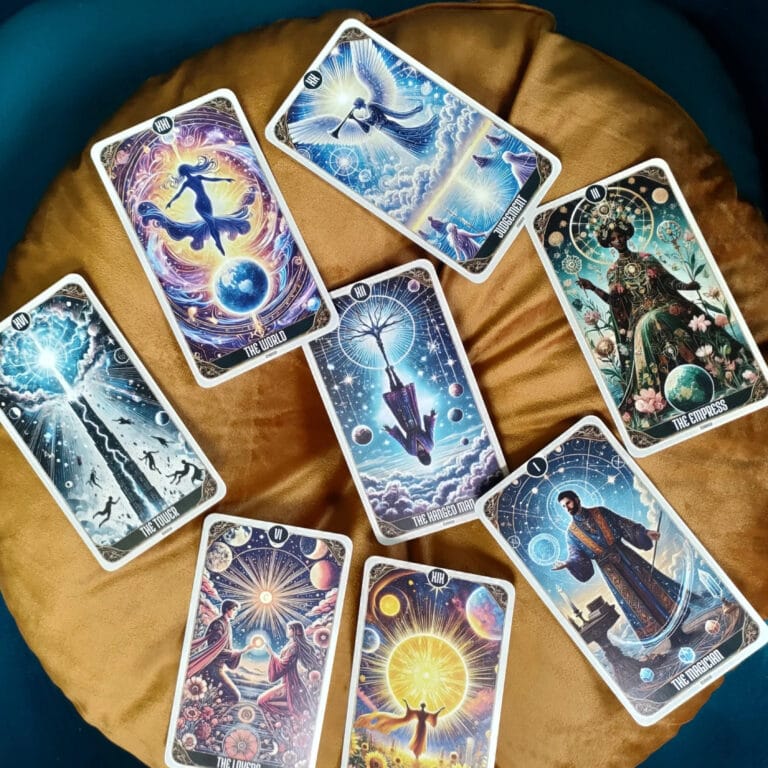
A standard tarot deck contains 78 cards, divided into:
- 22 Major Arcana (big life lessons and archetypes)
- 56 Minor Arcana (everyday situations and patterns)
The Minor Arcana is split into four suits:
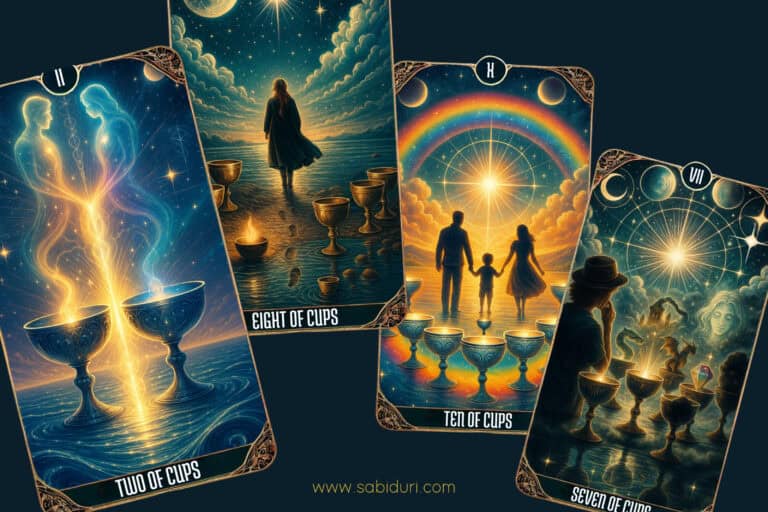
- Cups (emotions)
- Wands (action and passion)
- Swords (thought and conflict)
- Pentacles (work and material life)
No matter the artwork, the underlying system stays consistent. That’s the power of tarot.

Tarot Is a Symbolic Language
Tarot is structured symbolism; in fact, each number, suit, and archetype carries meaning.
The Fool’s journey through the Major Arcana mirrors psychological and spiritual development. You can take that system and apply it across different decks.
That’s why once you learn tarot, you can read almost any tarot deck. If you want to go deeper into how accurate tarot really is, I break that down here: Are Tarot Cards Accurate?
What Are Oracle Cards?
A universal system does not bind Oracle cards.
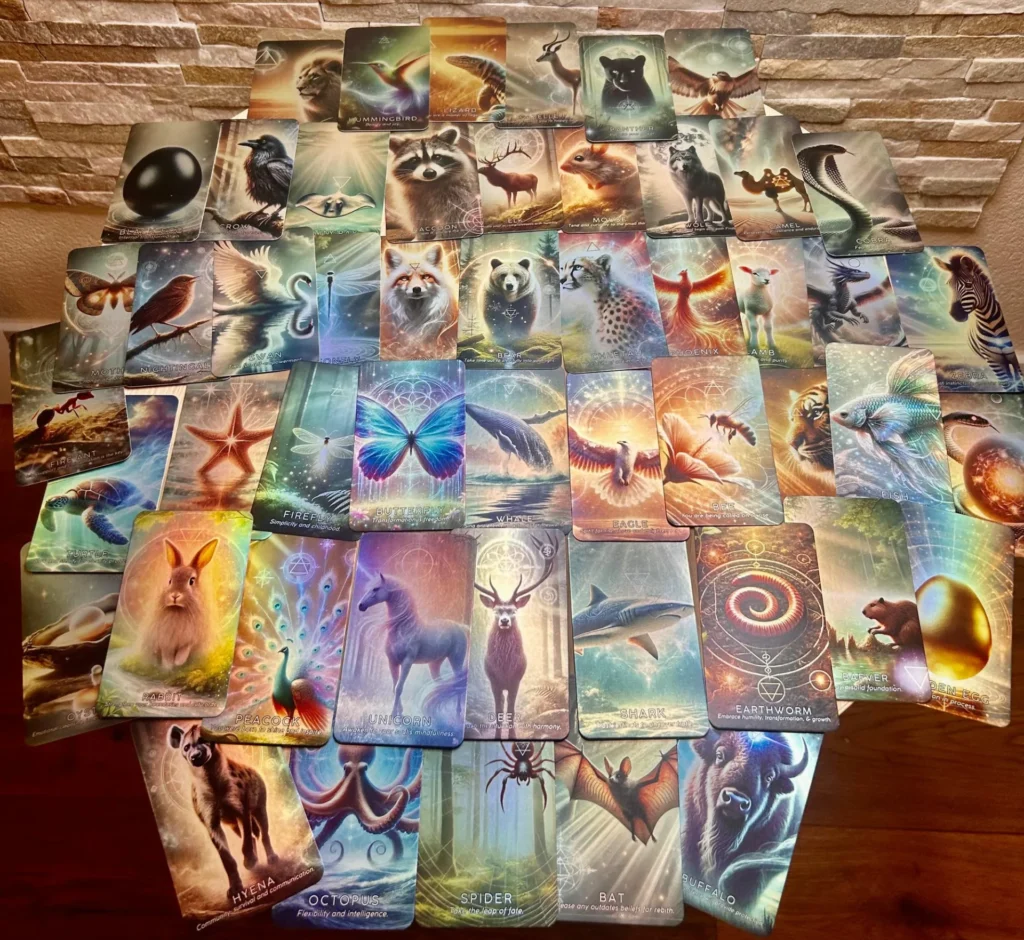
An oracle deck can have 30 cards. Or 44. Or 100+. There are no fixed suits. No Major or Minor Arcana. Each deck is created around a specific theme.
That’s the core difference in the whole oracle vs tarot deck conversation.
Oracle Deck Themes
You’ll find oracle decks focused on:
In most oracle decks, the meaning is either written directly on the card or clearly explained in the guidebook.
That makes oracle cards easier to begin with — but not necessarily deeper.
Oracle Cards vs Tarot: Key Differences
Let’s break this down clearly.
Structure
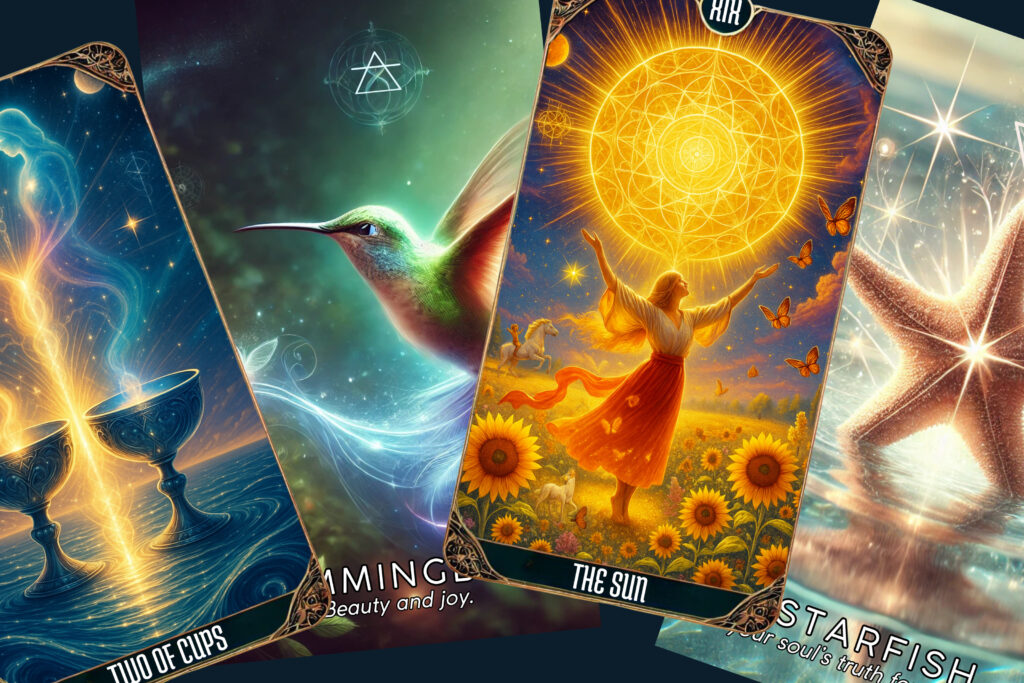
In any oracle deck vs tarot comparison, structure is the biggest separator.
Learning Curve
- Tarot requires study. You learn meanings, symbolism, and card relationships.
- Oracle decks are more intuitive out of the box.
That’s why in the tarot vs oracle discussion, beginners often lean toward oracle.
Reading Style
Tarot creates a layered narrative. Cards influence each other. Position matters. Oracle readings tend to be more direct. One card = one core message.
Upright vs Reversed
This is important. Tarot cards are often read upright and reversed. Reversals can shift or nuance meaning.
Most oracle decks don’t use reversals unless the creator specifies it. This makes tarot both more complex and more detailed.
Depth of Guidance
Tarot covers the full spectrum of human experience. That includes:
- Conflict
- Shadow
- Transformation
- Collapse
- Rebirth
Oracle decks often lean toward guidance and affirmation, though some go deep.
If you’re looking at tarot vs. oracle cards and asking which goes deeper, tarot usually wins in complexity.
Comparison Table: Oracle vs Tarot
| Aspect | Tarot | Oracle |
| Structure | Fixed 78-card system | Flexible, no set system |
| Learning Curve | Higher | Lower |
| Reversals | Commonly used | Rare |
| Spreads | Structured spreads | Flexible layouts |
| Themes | Universal archetypes | Creator-defined themes |
| Depth | Layered, psychological | Direct, thematic |
| Best For | Complex insight | Quick guidance |
How Do You Actually Use Each Deck?
How Tarot Readings Work
Tarot is usually read using spreads. Examples:
- Past / Present / Future
- Three-card clarity spread
- Celtic Cross
Each position influences interpretation.
Meaning can shift based on:
- Card placement
- Surrounding cards
- Reversals
Tarot rewards study. The more you learn, the more precise your readings become.
How Oracle Readings Work
Oracle decks are usually read:
- As single daily pulls
- In intuitive 3-card layouts
- For emotional check-ins
They’re powerful for:
- Morning intention setting
- Affirmations
- Big-picture themes
If you’re comparing oracle cards vs tarot in terms of simplicity, oracle cards are easier to start with.
What Kind of Guidance Do They Offer?
Tarot’s Style of Guidance
Tarot explores:
- Why is something happening
- The pattern behind it
- The potential direction
It can highlight subconscious influences and behavioral cycles.
Oracle’s Style of Guidance
Oracle focuses on:
- The current emotional tone
- The core lesson
- A reminder or nudge
It’s often cleaner, simpler, and more immediate.
Do Tarot and Oracle Cards Tell the Future?
No tool guarantees fixed outcomes; both reflect current energy and possible directions.
Tarot may feel more specific because of its layered system, but neither tarot nor oracle provides absolute prediction. They offer perspective, NOT destiny.
When Should You Use Tarot vs Oracle?
Use Tarot when:
- You’re facing a complex situation.
- You want deep self-reflection.
- You’re doing shadow work.
- You want structured insight.
Use Oracle when:
- You feel overwhelmed.
- You want a quick, clear message.
- You’re building a daily practice.
- You want themed guidance with a theme (angels, animals, etc.).
Can You Use Tarot and Oracle Together?
Yes, and many experienced readers do.
One method:
- Pull an oracle card to set the tone.
- Use tarot for the detailed breakdown.
- Pull one final oracle card as integration.
In most Oracle vs. Tarot deck comparisons, people treat them as opposites. They’re not, Tarot is the framework, AND Oracle can be the amplifier.
Choosing the Right Deck for You
Here’s where it gets personal.
If You Love Structure
You probably lean toward tarot; you like systems, depth, layers, and symbolism.
If You Prefer Intuition Over Memorization
Oracle might feel more natural if you want the message without having to study 78 archetypes first.
Follow the Artwork
You will be staring at these cards. If you don’t like the imagery, you won’t use the deck.
Ignore the Myth
You don’t need to be gifted your first tarot deck, buy the one that speaks to you.
How to Get Started With Tarot
- Choose a deck that resonates.
- Start with a 3-card spread.
- Learn traditional meanings.
- Journal your pulls.
- Then layer intuition on top.
Tarot takes time, but it builds depth.
Carry Your Guidance With You
Created by Giorgia, for souls ready to reconnect
with their inner wisdom and divine guidance.
How to Get Started With Oracle Cards
- Ask one simple question: What do I need to know today?
- Pull one card.
- Sit with it.
- Journal what comes up.
Oracle decks are powerful for daily consistency.
FAQs: Oracle vs Tarot
Are Oracle Cards and Tarot Cards the Same?
No. Tarot follows a fixed 78-card structure. Oracle decks vary by creator.
Is One Better Than the Other?
No. They serve different purposes.
Are Oracle Cards Easier Than Tarot?
Generally, yes because there’s less structure to memorize.
Can You Use Oracle Cards Like Tarot Cards?
You can create spreads, but Oracle doesn’t follow the same system.
Do I Need To Cleanse My Deck?
It’s optional. Some people like ritual. Some don’t. The power is in your relationship with the tool.
Do I Need to Be Psychic to Read Tarot or Oracle?
No. You need awareness, reflection, and practice.
Final Thoughts: Oracle vs Tarot
Here’s the bottom line.
If you want structure, psychological depth, and layered insight… tarot is your magical tool. If you want flexible, intuitive, theme-based guidance… Oracle works beautifully. And if you’re honest? You’ll probably end up using both.
Now you understand the real difference between Oracle and Tarot. You’re not guessing anymore.
If you’re still wondering how accurate tarot readings really are, read this next: Are Tarot Cards Accurate?
And then decide what kind of reader you’re becoming.
Carry Your Guidance With You
Created by Giorgia, for souls ready to reconnect
with their inner wisdom and divine guidance.